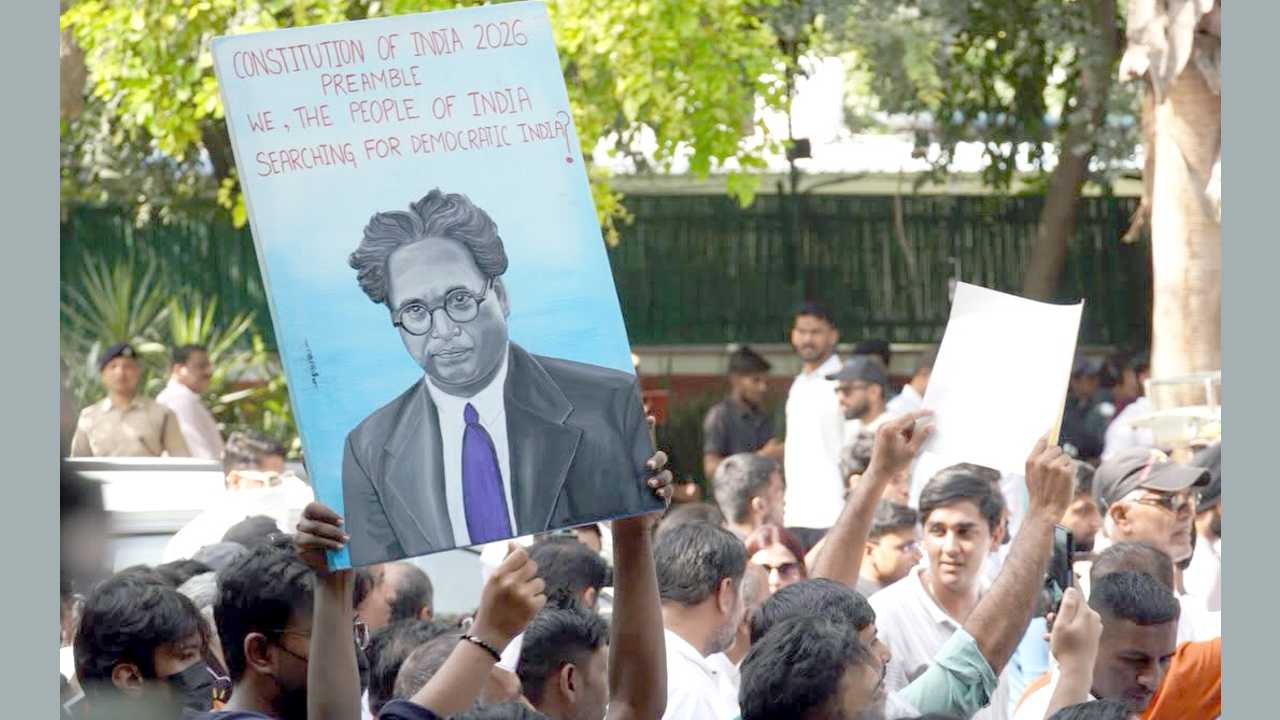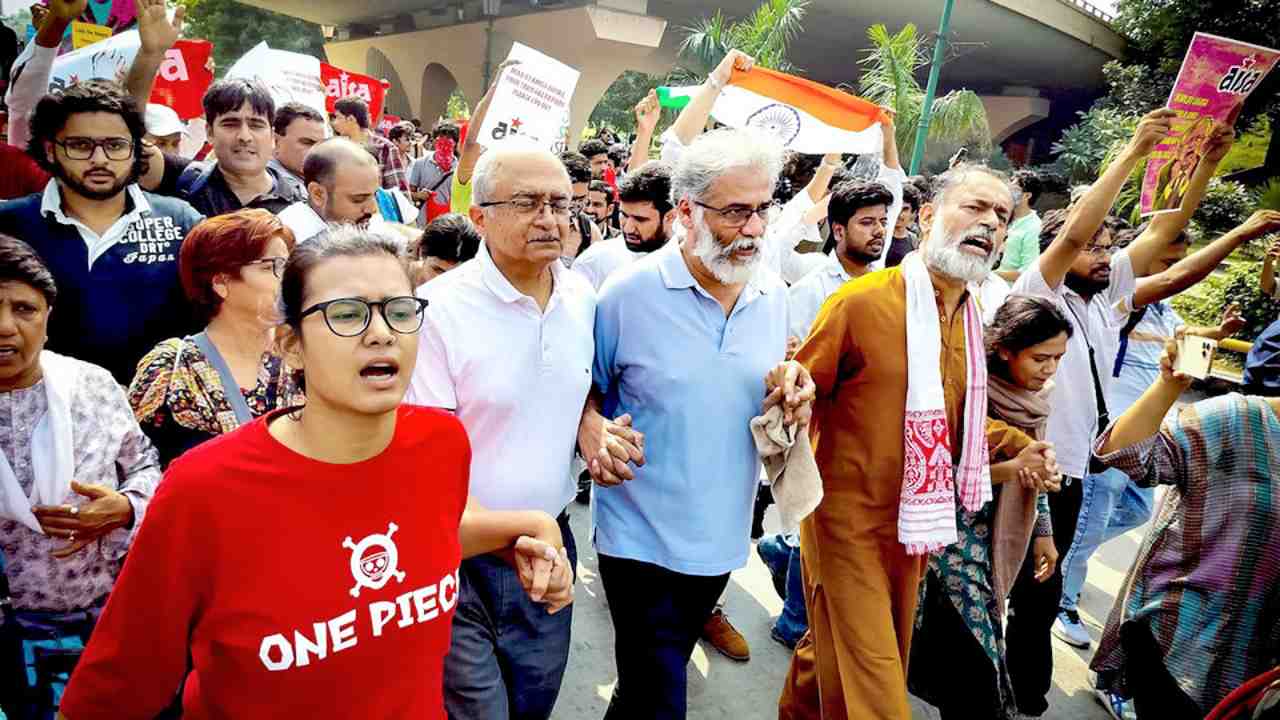

The opening session, "Resisting Trump's New Colonialism", featured Helen Yaffe, Professor of Latin American Political Economy at the University of Glasgow, who spoke on resistance in the United States. Sabrina Fernandes, a Brazilian political economist and ecosocialist activist, described how the movement that defeated the far-right president Bolsonaro is weakening, with the threat of his son being elected. Speaking on behalf of the CPI (ML), N Sai Balaji highlighted the failure of the Modi government's foreign policy, that abdicated the country's interests to Trump's America. He also highlighted the hope offered by Gen Z students’ movement in India.
Discussions ranged from the raging climate crisis in South Asia to building a new left in the Asia-Pacific region and global solidarity with Palestine. Prominent participants included Ayesha Ahmad, a socialist-feminist activist, researcher and labour-rights practitioner associated with the Haqooq-e-Khalq Party (HKP), Pakistan, and a founding member of the Women Democratic Front; Khyl Ramos, a deputy project manager and community-development practitioner with the Transform Asia Gender and Labour Institute and Partido Lakas ng Masa (PLM), Philippines; Rocky, a death penalty abolition activist and organiser; and Yong Feng, a political-ecology and environmental-justice researcher associated with the Singapore Climate Rally. Activists from Australia, Canada, Cuba, Iran, Malaysia, South Africa, the United States, Western Sahara and Scotland also represented social movements in their countries.
The devastation in Nepal, where glacial lake outburst floods displaced thousands and killed many, raised questions about the survival of smaller nations. Climate-vulnerable populations bear the brunt of the impact, which fuelled the debate on loss and damage.
The Rise of the Far Right in Australia
The far right in Australia is challenging the country's multicultural, immigration-based development model, even as climate extremes grow more severe. This mirrors a global trend, in which the far right exploits the internal crises of capitalism to target immigrants and push xenophobic policies. Aligned with corporate interests and profit-driven motives, it denies climate change and seeks to perpetuate the exploitative policies of neoliberal economics.
Australia's growth has been built substantially by immigrants from East and Southeast Asia, Europe and, over the last three to four decades, South Asia, particularly India. They continue to drive the service, technology and healthcare sectors. Yet Australia's far right, led by One Nation leader Pauline Hanson, has escalated attacks on immigrants, particularly Indians, falsely accusing them of stealing jobs.
The conference examined these challenges in depth. Young left activists from Singapore, Malaysia and Brazil, First Nations peoples and members of Australia's socialist movement gathered to outline a path forward. Delegates also studied the trajectory of US imperialism, especially in India, the Philippines and other Third World countries.
Housing was a prominent concern. Rising rents are directly linked to debt-based financing of housing, and the far right is channelling public anger over this crisis towards immigrants. The Socialist Alliance and other socialist parties are building campaigns for public housing. The government, however, is pandering to the far right by tinkering with immigration policies, which creates uncertainty for foreign students, skilled workers and others on work visas.
Students who have taken heavy loans to study in Australia, and who work to pay off the debt, are struggling under this constant attack. The Indian government, rather than intervening to protect their interests, appears to be lacking in its approach.