During those years, Spanish filmmaker Luis Bunuel was living in the USA. He was assigned to prepare a shorter version of German propagandist Leni Riefenstahl’s 1935 documentary film ‘The Triumph of the Will’. The shorter version of ToW was made to be part of the toolkit for producing a counter-propaganda against the Nazis. Bunuel invited some chosen politicians and cultural personalities to watch the film. Among them were renowned filmmaker Rene Clair and legendary Charlie Chaplin. Both showed up and watched the film sitting together. Bunuel wrote that they had entirely different reactions.
Horrified by the power of Hitler’s images as constructed by Leni in this documentary, Rene Clair told Bunuel not to show the film to anybody ever. “Chaplin, on the other hand, laughed [while watching the film], once so hard that he actually fell off his chair," wrote Bunuel. Every time Chaplin saw the images of Hitler’s animated speeches and idiosyncratic gestures on screen, Hitler, perhaps, appeared to him as a miserable buffoon inflated by the propaganda. “Was he so amused because of The Great Dictator?” Bunuel wondered! In ‘The Great Dictator’ (1940), leaving back the image of the adorable innocent little tramp, Chaplin appeared as a vociferous political satirist. His strident humor in the film brought down the Fuhrer’s larger-than-life image to the ground; his caustic humor brought the dwarf-turned-monster back to the stature of a dwarf again. Chaplin’s film proved to us that if we amass enough courage in us to ridicule the power, the myth of the invincible falls flat before our eyes. This is the power of humor and laughter!
There have been moments in history when the power of humor reappears to challenge the authoritarian control. The rebellious students who occupied the university campuses and the streets of Paris in May ’68 proved this. Barricades, which they erected against the system, were made not only with objects but also with wit and satire. For them, humor was a double-edged sword, one edge of which blue-penciled the monumental boredom of life subjected to them by capitalism, and the other edge was made to kill the monstrous political system of Charles de Gaulle. They stenciled on the street, “It is forbidden to forbid!”
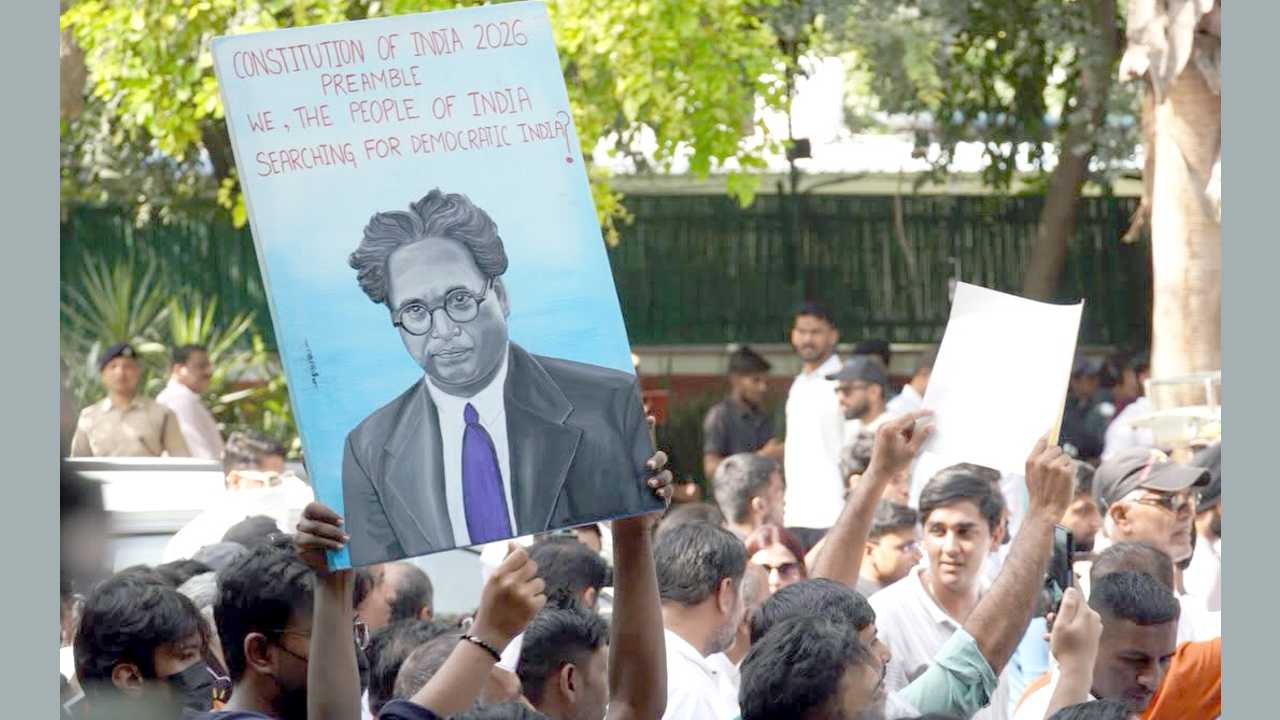
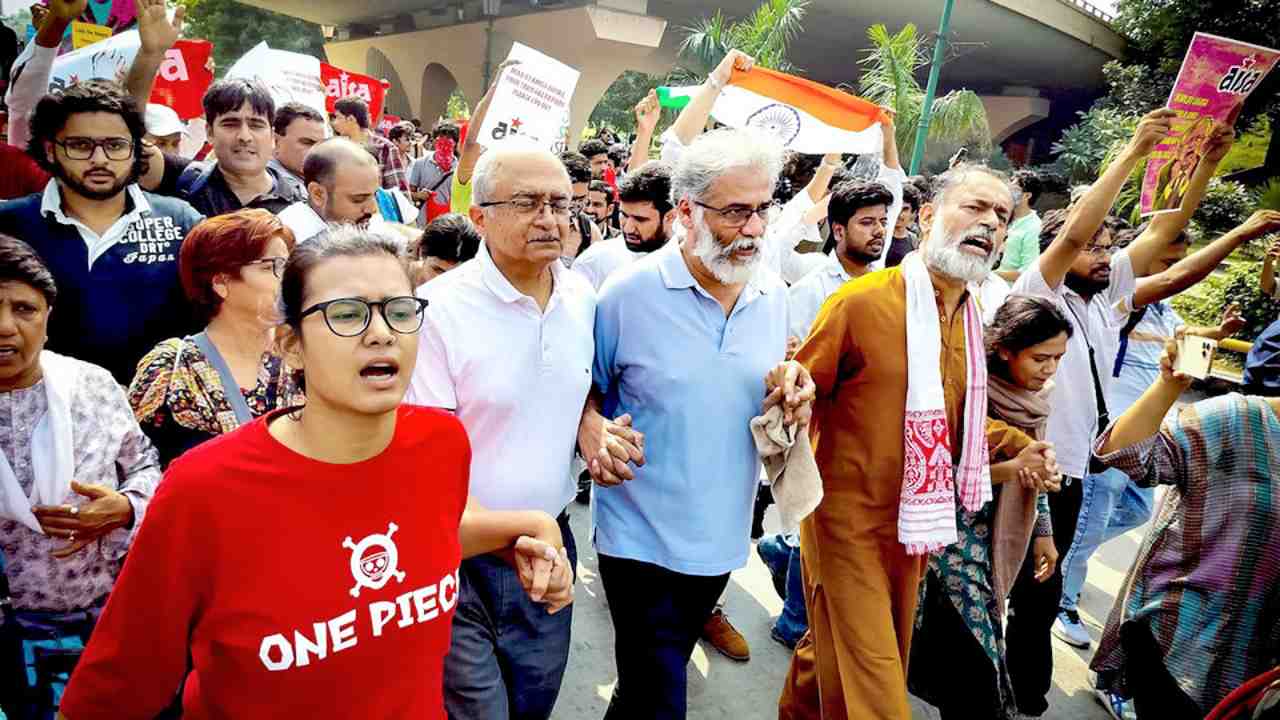
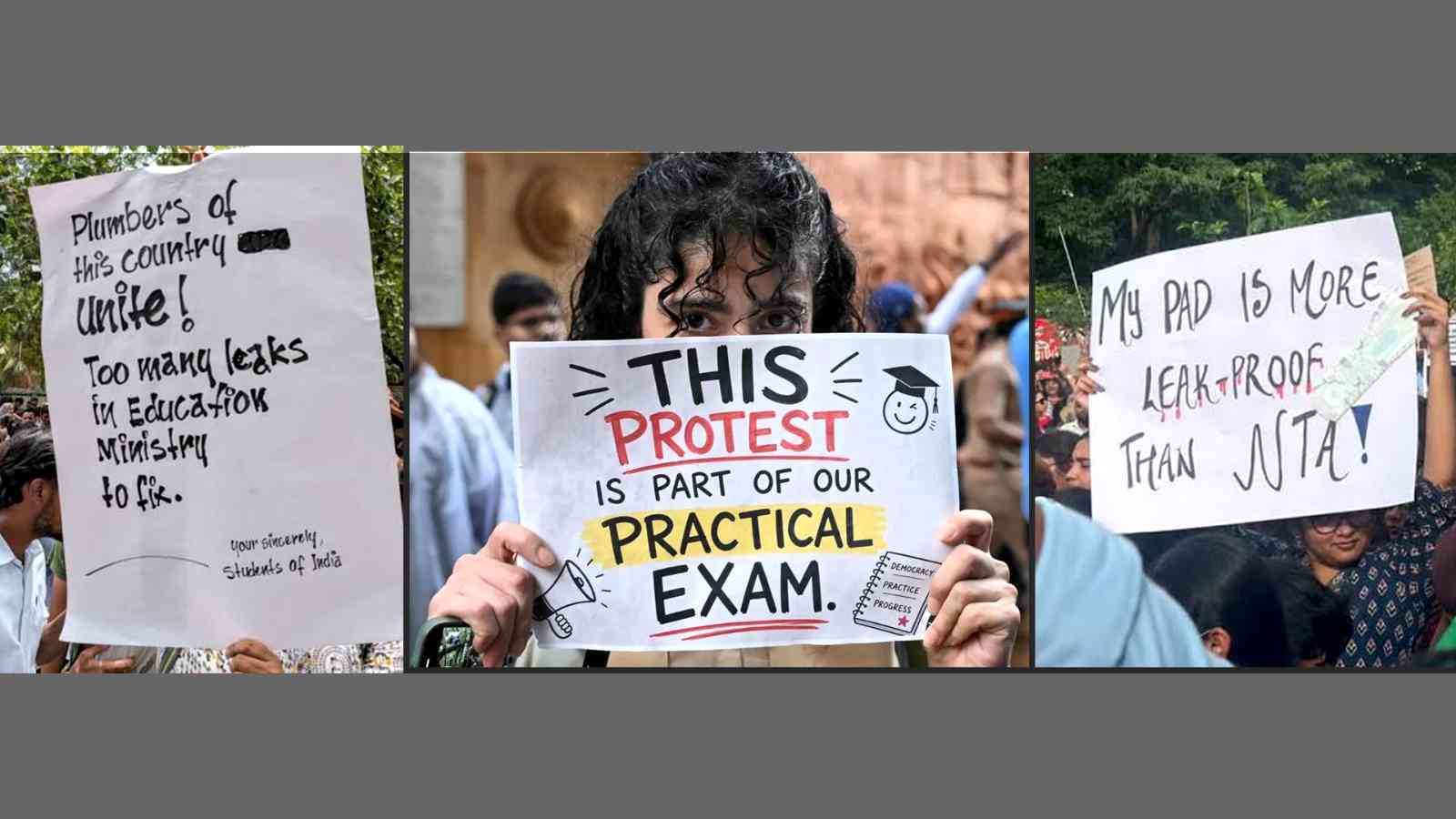
We came across a similar spirit in the Jantar Mantar protest last month. There were reasons to believe that one major source of the strength of their unity was satirical posters, memes, and slogans circulated as real-life visuals and mediated viral images that ridiculed Modi and Dharmendra Pradhan. The brave act of ridiculing the Godi media-produced images of the ‘strong man’ and ‘tough leader’ crumbled to the ground in no time. The huge upsurge of humor and wit yielded a nation-wide magical effect. A strong sense of liberation flushed out the fear accumulated in the public psyche in the last decade. The horror of fascism that the people of India have been living through for more than one decade suddenly waned from public mind. The government, as expected, intended to stop the non-violent youth uprising by waging unprecedented police brutality on them. It was an unequal battle between brave humors versus cowardice brutality.
The protesters raised their voices against the violent onslaught that the police perpetrated on them. They unequivocally condemned the nationwide police brutality on the youth. But the beauty lies elsewhere. The resilience that they built up on the face of state violence was informed by humor. The sadist terror was unleashed on them, but they refused to be terrified. They did not even allow the horror of police brutality to set in the public mind. Let us emphasize the Gen Z phrase "FoMo"—the fear of missing out. After 20 July’s police brutality on the protesting students in New Delhi, Gen Z made reels and other social media content on how the people who missed out the 20 July incident were suffering from FoMo. The witty reels and other contents put forward a funny message that youth who had not been present there on the Delhi streets for some reason were feeling hapless as they missed out the opportunity to be present there beside their friends and were excluded from the whole incident of police lathi-charge that their friends had encountered. The police wanted to create a phobia; the Gen Z responded with subtle and intelligent humor. This was not a stray phenomenon.
All over the country the Gen Z refused to submit before the psychological warfare the police administration waged on them. The images of Patna youth asking the police, ‘Keya Ansu gas nehi hayn aapka paas,' and then their dancing before water canon went viral. The Gen Z’s witty method of refuting the brute authoritarian force that they have successfully deployed in the recent protests was a new phenomenon. They provide institutional politics with a new style of articulation. ‘Chhappan inch ka chhota bandar’ was taken up by the opposition MPs, as they coined slogans out of those lines sung by the students. This is unprecedented in Indian politics.
The recent student activism informed by satire and humor made me fully understand why Chaplin burst into a series of laughter while watching Hitler on screen. The Gen Z of India realized that so long you fear the authority of an authoritarian rule, it continues to subjugate you. So, they made it a laughing stock. We emphasized much on understanding fascism as a content. We ignored the fact that fascism is a form too. The Godi-media 24x7 as a collaborator of the current totalitarian rule showcases the form of Indian fascism for the masses. We must underline the fact that the power of fascism often originates from its form.
The Gen Z of this nation erected an impermeable barricade of satire, parody, and other forms of comedy before the regime. The immediate consequence of which is that the horror of fascism, at least for the time being, ceases to function. The form of fascism is successfully demystified, the propaganda dismantled.