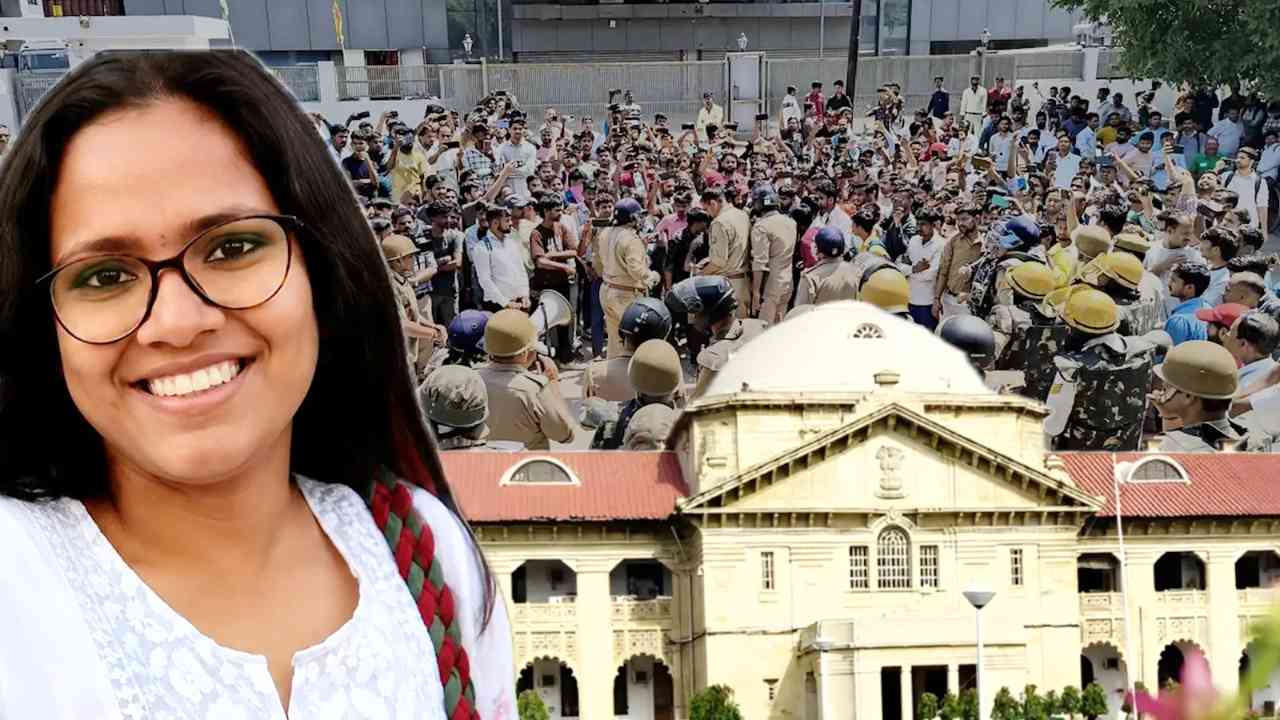
The Allahabad High Court’s judgment in Akriti Chaudhary v. Union of India is a welcome change, because apart from quashing an order of preventive detention under the National Security Act (NSA), it records in direct terms how the machinery of preventive detention was used against a student activist involved in a workers’ agitation. It goes one step further, and fixes responsibility upon the erring officers who exercised that power – most notably the DM Medha Roopam.
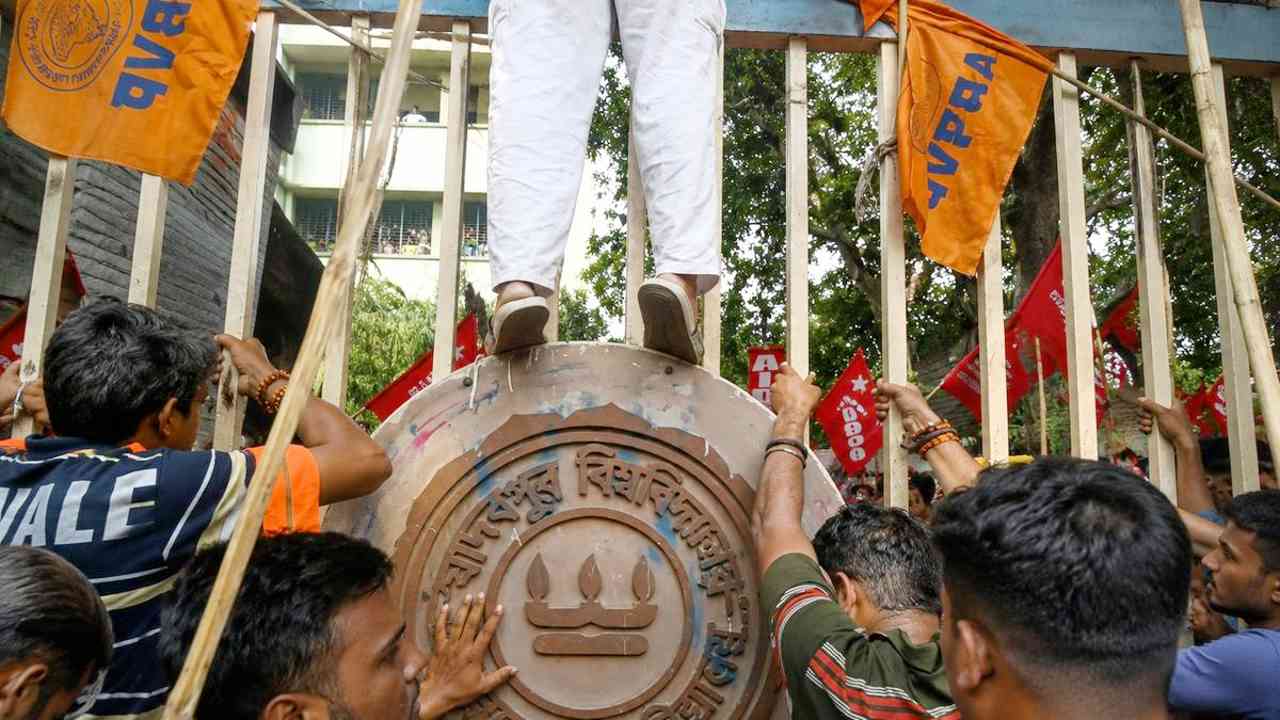
The administration’s case against Akriti went considerably beyond alleging her participation in an unlawful assembly. She was projected as one of those responsible for organising and instigating the unrest, and inter alia, the NSA was subsequently invoked against her.
A Division Bench of Justices Atul Sreedharan and Achal Sachdev found that the material relied upon by the administration did not support this case. Despite the allegation that Akriti had incited workers to violence, the State was unable to show any message, video or other material in which she called upon anyone to indulge in arson, stone-pelting or destruction of property. The grounds of detention were described by the Court as repetitive, speculative and opinion-based.
The chronology of Akriti’s arrest made the State’s case even more questionable. The Court found her version, that she had been taken into custody on the evening of April 11, probable on the basis of the State’s own material. The principal incidents of violence occurred subsequently. There were serious irregularities in the paperwork relied upon to justify her custody as well. A notice purportedly issued before her arrest contained the number of a General Diary entry generated in connection with the arrest itself. The High Court held that the notice had, therefore, been prepared after the event and characterised the procedure as a “sham”.
The policing of workers’ movements has repeatedly relied upon the construction of an external instigator: the union activist, student, journalist, or political leader who is said to have introduced politics into an otherwise passive workforce. Such a formulation denies workers their own political agency. Material grievances concerning wages and conditions disappear from view and the agitation itself is reconstructed as the product of conspiracy.
The Allahabad High Court rejected this approach. Its judgment recognises that the possibility of a breach of peace cannot become a general prohibition upon people assembling and agitating for their rights. Where violence takes place, responsibility for that violence must be established against the persons alleged to have committed or instigated it. The mere fact of participation in, or support for, a protest cannot substitute for such evidence.
The issue becomes sharper in the context of preventive detention. The NSA does not operate upon proof of an offence already committed. It permits incarceration on the basis of the executive’s satisfaction that detention is necessary to prevent future conduct. The District Magistrate is, therefore, required to independently assess whether the material before her warrants recourse to an exceptional power rather than the ordinary criminal law.
The High Court found that Gautam Buddh Nagar District Magistrate Medha Roopam had failed to perform that function. Where the police dossier contained allegations unsupported by credible material, the Court held, the District Magistrate was required to examine the record “threadbare”. Instead, the Bench concluded that the exercise of power appeared intended to make an example of Akriti and thereby deter others from entering public spaces in support of workers.
The judgment’s observations concerning the bureaucracy are unusually severe. It reminded civil servants that their constitutional allegiance is not to the political executive and warned against the emergence of “despotic” administration. That warning is particularly relevant in cases of preventive detention, where executive power itself determines whether a citizen remains incarcerated.
The Court also refused to allow the consequences of illegality to be borne entirely by the public exchequer. It awarded Akriti compensation of ₹5 lakh and directed that the amount be recovered from the salary of the District Magistrate and the police officers responsible for preparing the detention material, down to the concerned Station House Officer. It further directed that the Court’s displeasure be entered in their service records.
The direction in Akriti Chaudhary clearly recognised that the deprivation of liberty was the result of decisions taken by identifiable public officials. Having found those decisions to be arbitrary and unsupported by material, the Court sought to attach consequences to the officials exercising the power. The wider circumstances of the Noida crackdown make such accountability more necessary. In the parallel NSA proceedings against journalist Satyam Verma, material forming part of the police dossier was found to reproduce text from a right-wing social-media account. The material sought to place labour organising, Marxist political activity, anti-CAA mobilisation, Palestine solidarity and other political protests within a common narrative of anti-State activity.
The significance lies in how the ideological vocabulary of the Hindutva right can enter official police material and thereafter, acquire the status of information placed before an authority exercising preventive-detention powers. Political affiliation and participation in democratic movements then begin to function not as constitutionally protected activity, but as circumstances from which dangerousness is inferred.
The same District Magistrate approved the NSA proceedings against both Akriti and Satyam Verma. The Uttar Pradesh government decided to challenge the High Court’s order, and Roopam separately approached the Supreme Court against the adverse findings and the direction for recovery of compensation from her salary. The attempt to impose personal consequences for an unlawful detention has itself become a matter under challenge.
Akriti and the other activists continue to face criminal cases arising from the Noida protests. The question before the High Court was not whether political activists could be prosecuted for specific criminal acts. Its holding is narrower and more important: allegations of participation in political protest cannot be converted into grounds for preventive detention without material demonstrating the necessity of such detention.
The case points to a wider civil-liberties problem. The repression of protest increasingly operates not only through prosecution for specific acts, but through the construction of political association itself as a security concern. Workers organise; activists extend solidarity; journalists document the mobilisation; ideological affiliations are collected into dossiers; and exceptional laws are then invoked on the basis of the resulting narrative. Akriti Chaudhary places a constitutional limit upon that process. It affirms the right to protest, insists upon evidence before political activity is converted into conspiracy, and, importantly, refuses to treat unlawful exercises of coercive power as acts for which no individual officer needs to answer.