Against this background, the unanimous passage of the women’s reservation Act in Parliament in 2023 was a historic moment. The BJP dedicated it to the "Nari Shakti" (women's power) of the country and asserted that past governments had deceived women for decades. This criticism is not entirely baseless; since 1996, the promise of women’s reservation was made repeatedly, yet no law could be enacted due to a lack of political consensus.
Yet, despite the bill passing in 2023, the government deliberately kept it stalled. A constitutional provision for 33 percent reservation for women was enacted but could not be implemented because the government cleverly linked this law to the 2027 census and the subsequent delimitation process. Until both these processes are completed, women’s reservation cannot come into effect.
Women’s reservation and delimitation are two distinct subjects. The objective of the former is to increase women’s political participation, while the latter is tied to the redrawing of parliamentary and assembly constituency boundaries and the redistribution of seats. The legislation made these two processes dependent on each other.
Delimitation is a complex and debatable issue in Indian politics because it will determine the number of parliamentary seats each state receives and the impact it will have on the country's political balance. Several South Indian states have already voiced their concerns regarding this process. Linking women’s reservation to delimitation is a clever ploy by the Modi Government to unnecessarily entangle the debate on women’s representation with the politics of delimitation. The issue of women’s reservation has a broad social acceptability, while the question of the delimitation process is already attracting political objections from different states. Thus, the BJP is thinking of gaining higher moral ground by labelling any political objections raised against delimitation as anti-women, while in the process it has successfully stalled the implementation of the women’s reservation in the parliament. If the ruling party has ever considered women's political participation an urgent necessity, a clear timeline and political honesty must also be demonstrated.
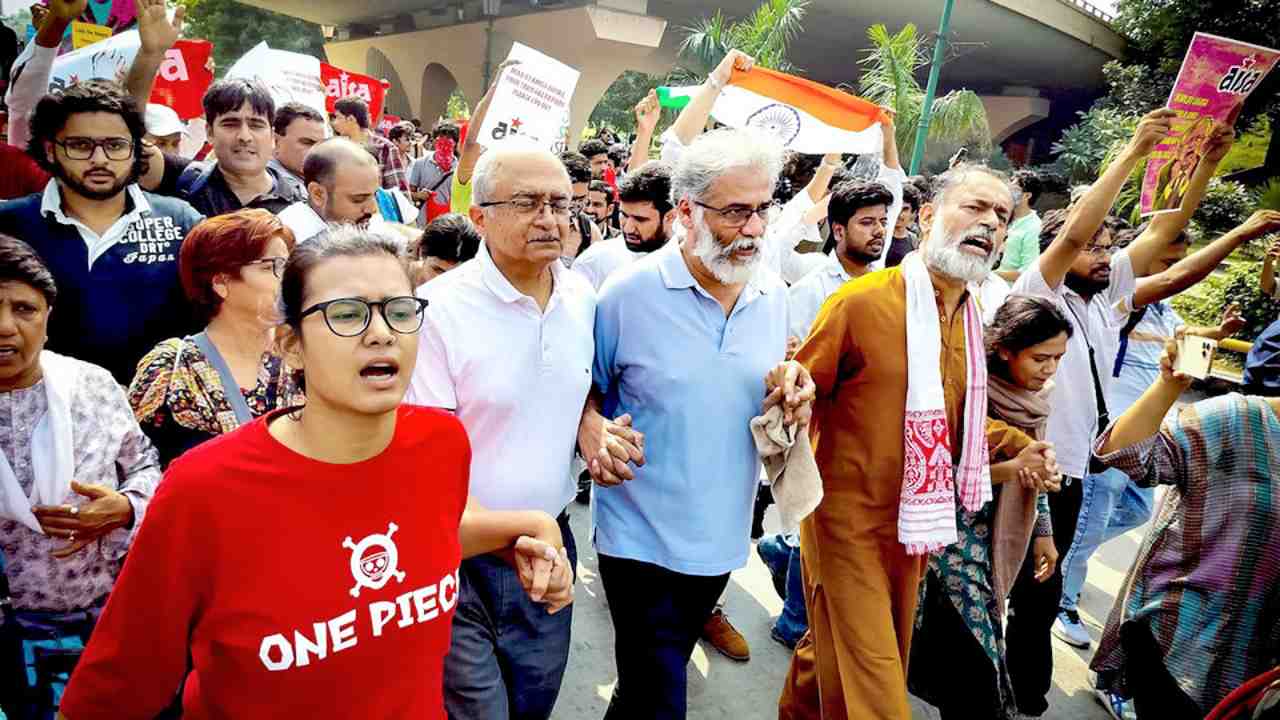
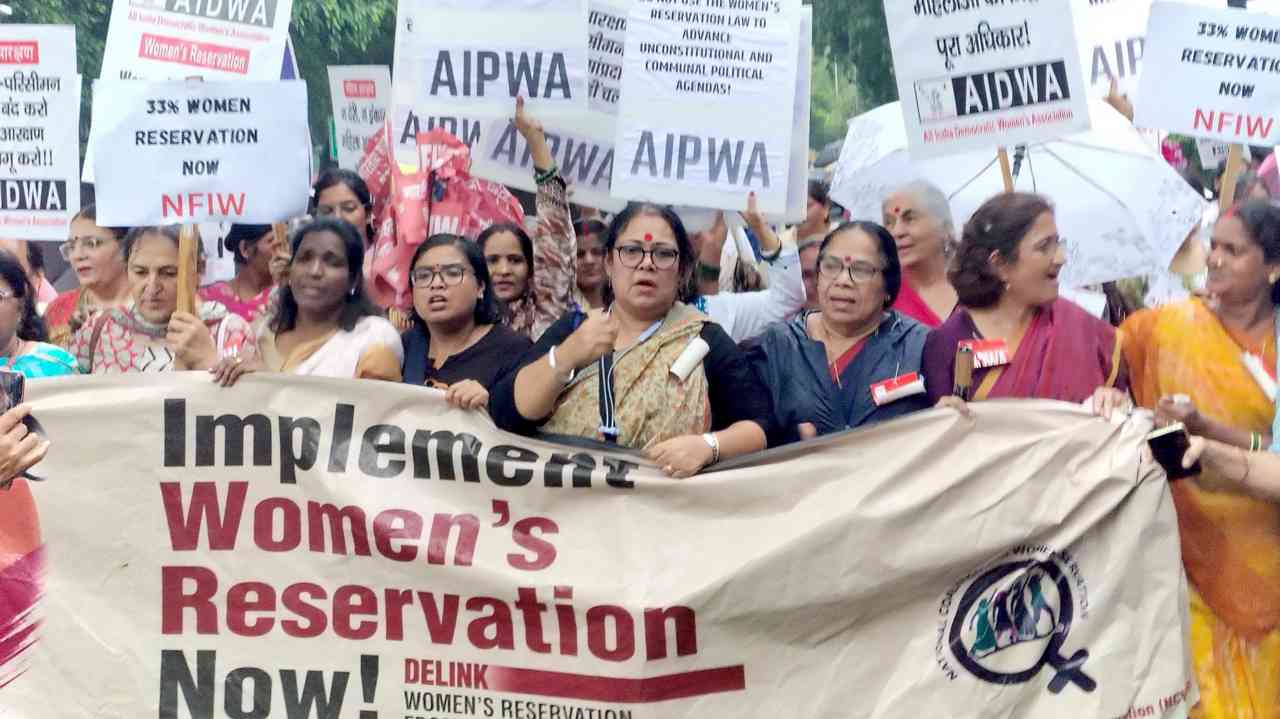
Demanding the immediate implementation of women’s reservation by freeing it from the conditions of the census and delimitation, the All India Progressive Women’s Association (AIPWA) and other women’s organizations under the banner of the National Coalition for Women Reservation have been continuously struggling. During the monsoon session of Parliament, an indefinite sit-in by women was held at Jantar Mantar in Delhi. As part of this campaign, memorandums were submitted by the delegations of the coalition to the opposition and INDIA bloc MPs, appealing to them to oppose the BJP government's attempts at communal division and arbitrary delimitation, and the 33 percent women’s reservation be implemented immediately on the basis of existing number of seats in the Lok Sabha and state legislative assemblies, and that it be delinked from the census and delimitation.
On this occasion, AIPWA National Secretary Meena Tiwari said that the government wants to use women’s reservation for its political agenda of delimitation to acquire the power to arbitrarily increase the number of Lok Sabha seats. This was confirmed once again in 2026 when the government suddenly convened a special session of Parliament as if to pave the way for 33% reservation for women starting from 2029, yet failed to delink women’s reservation from the controversial issue of delimitation.
AIPWA also organized protests and memorandum submissions across state capitals and district levels. This program was implemented in several states, including Bihar, Jharkhand, Uttar Pradesh, West Bengal, Assam, Rajasthan, Karnataka, Tamil Nadu, and Andhra Pradesh. In Bihar one-day sit-in protests were held in all districts, carrying this demand to every village and city.
The central government must stop the politics of further delaying women’s reservation and implement it immediately. After waiting three decades for the law, women cannot be expected to wait indefinitely for its implementation now.
(Translated from Hindi)