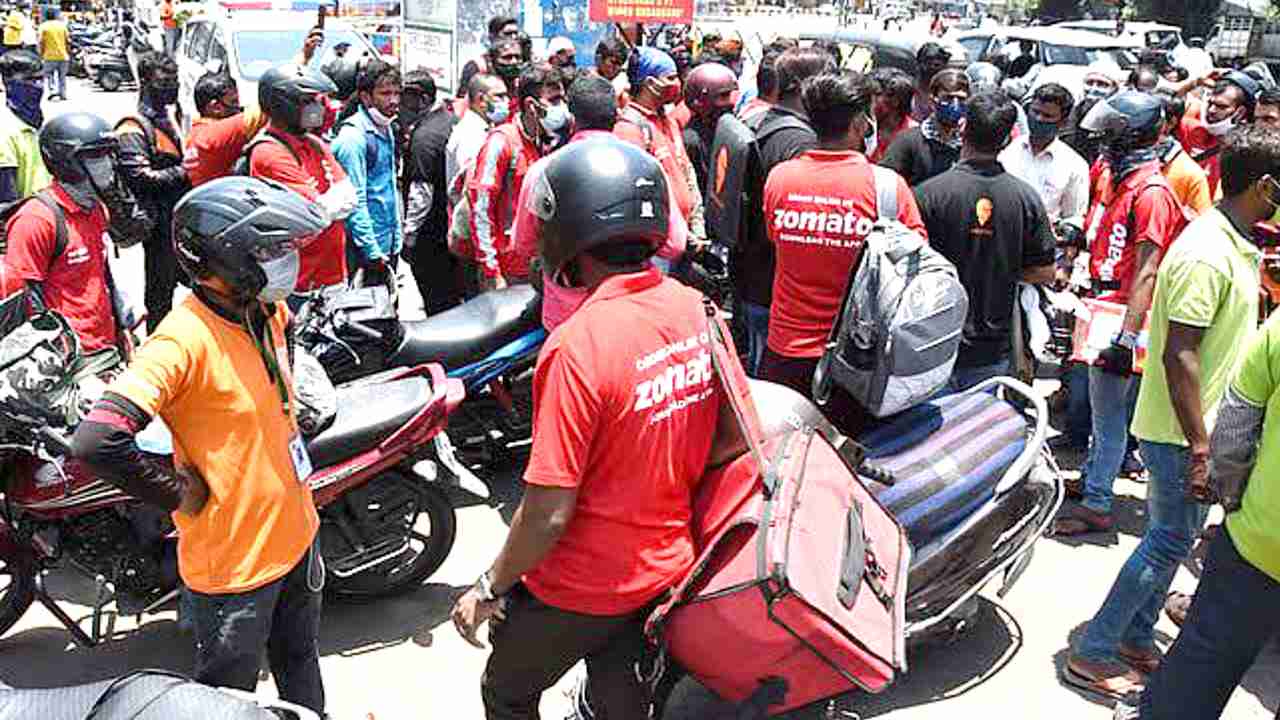
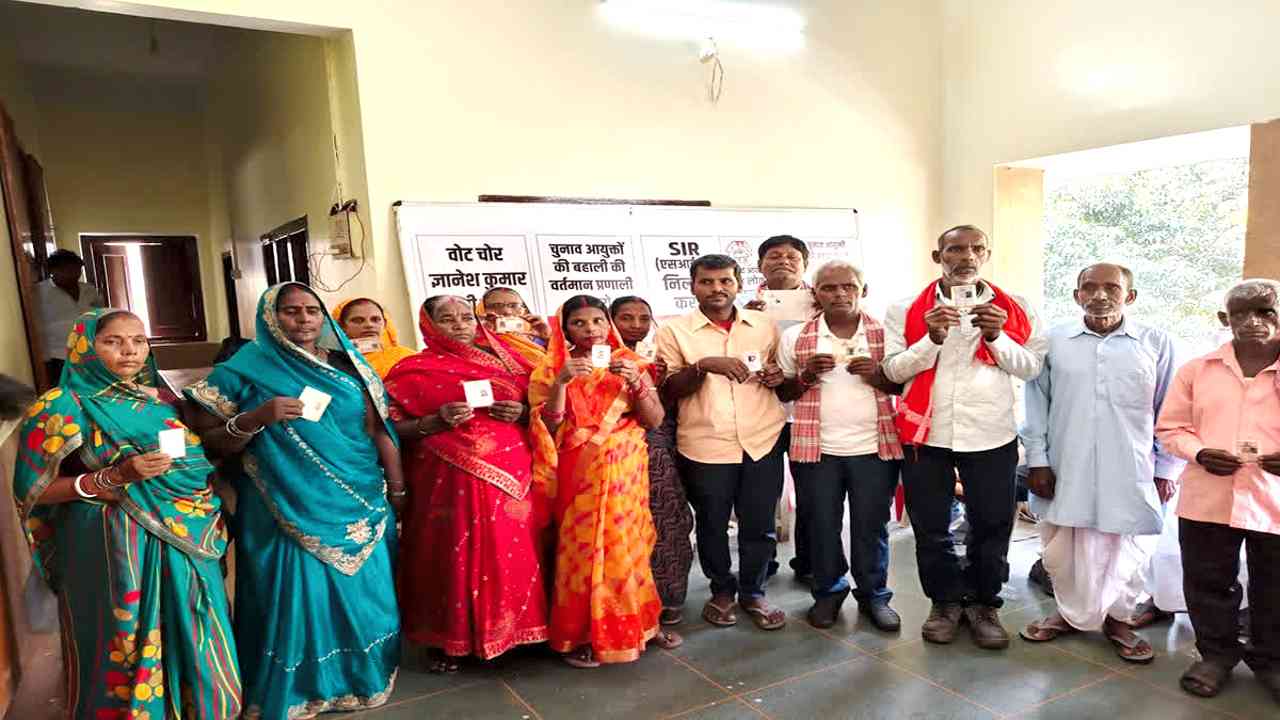
Raheesh Kumar of Kanaura village in Paliganj and his wife, Rinku Devi, have both had their names deleted, with “shifted” recorded as the reason. Showing their voter ID cards, they said, “We voted in the Lok Sabha elections based on these very cards. We live here. But this time, on polling day, we were told that our names were not on the list. Where are we supposed to run around? Should we do our daily wage work or run around to the BLO and offices to get our names added to the electoral rolls? If we miss even one day of work, there will be no food at home.”
Vishun Singh, aged 64, a resident of Wajitpur in Arwal, was also deleted on the ground that he had “shifted”. He discovered this only at the polling booth and had to return without voting. He said, “This is a conspiracy. I have voted in so many elections, but this time my name has been deleted. Where should I go?” Vishun Singh is a illiterate.
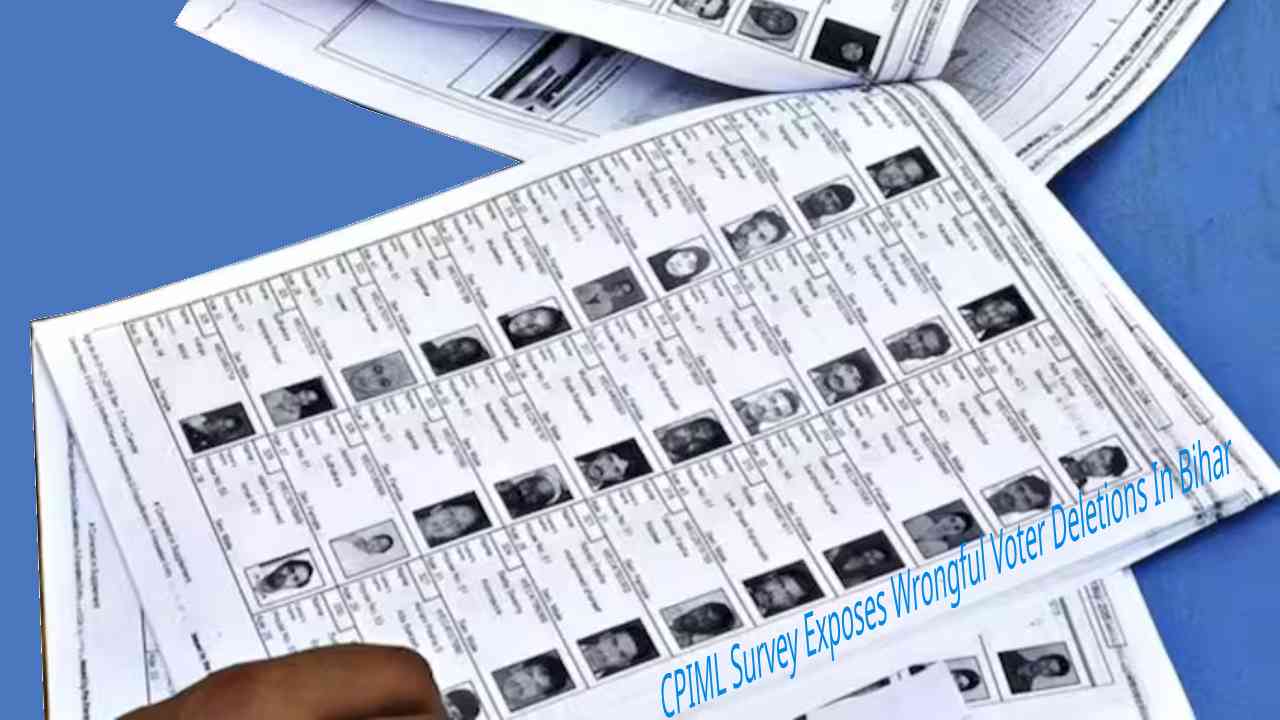
A jury member, Professor Bharati S. Kumar, former Head of Department of History at Patna University, found the survey findings extremely shocking and disturbing. The survey of 102 polling booths had found living voters whose names were missing from the rolls. This raises serious questions about the functioning of the Election Commission, and Chief Election Commissioner Gyanesh Kumar must be held accountable and removed immediately. She added that Prime Minister Narendra Modi and Union Home Minister Amit Shah have no right to remain in office given their tacit political connivance with the Commission. The SIR, she said, poses a serious threat to the country’s democracy and to citizens’ voting rights. If a citizen’s vote is removed from the rolls, how can their democratic rights be protected? A broad-based and decisive democratic movement must therefore be built across the country, around demands including Gyanesh Kumar’s resignation and the accountability of the Election Commission.
Another jury member, Uday Narayan Chaudhary, former Speaker of the Bihar Legislative Assembly, said the statements recorded during the survey raise serious questions and that a case of sedition should be filed against the Chief Election Commissioner. Reports indicate that more than seven million names have been removed in a similar manner across all 243 Assembly constituencies in Bihar, in contravention of the spirit of the Constitution, which envisages government of the people, by the people and for the people. He said people must also raise their voices against the country’s economic policies and the handing over of its resources to a few large corporate houses and foreign interests. He hoped the INDIA bloc would launch a powerful democratic movement in the national interest, not merely against one individual or institution, but for the protection of democracy, the Constitution and people’s rights.
Jury Member Pushpendra, the national vice-president of PUCL, pointed out that the hearing was being held at a time when the people had lost faith in the government, and the government too had accepted that these people were not going to elect it. The SIR, therefore, has attempted to render the people’s will meaningless so that the government can remain in power. The testimonies confirmed this. On the very day the Chief Justice of India was excluded by law from the process of appointing the Election Commission, its legitimacy became questionable. In matters concerning elections, whether delimitation or the violation of voting rights, the role of the Supreme Court and the Chief Justice has also not been responsible.
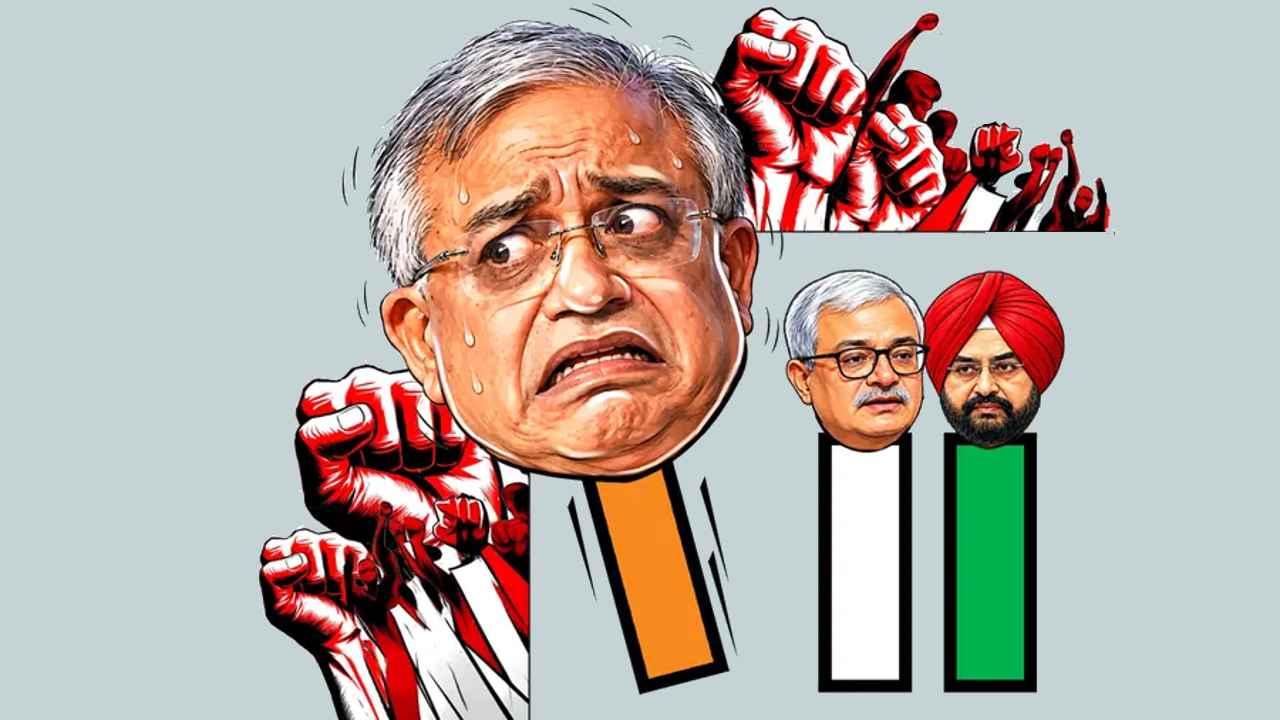
CPIML General Secretary, Comrade Dipankar said the situation has reached a point where the people are no longer choosing the government; rather, the government is deciding whom the people should choose. It was with this objective that a new law was enacted in 2023 to appoint the Election Commission through a committee comprising the Prime Minister, one of his ministers and the Leader of the Opposition. This deeply weakened the institutional impartiality of the Commission. Moreover, the Chief Election Commissioner and his two colleagues have been granted legal protection, severely restricting the scope for action against them.
The Indian Express reported that Gyanesh Kumar was taking decisions even without the agreement of the other two members. After a meeting at 3 PM on September 26th, the Commission stated that agendas and minutes of future meetings would be made public, which itself shows the lack of transparency within it. When ordinary people are struggling with inflation and an economic crisis, why should there not be transparency regarding the functioning and expenditure of constitutional institutions? Why would those who gain political benefits from this system take action against it? A lack of accountability is also evident in elected representatives, who, instead of answering the people’s questions, display arrogance.
The SIR exercise in Bengal was even more extensive than in Bihar. Millions of names were removed on grounds of logical discrepancies. Following complaints, tribunals were set up, and it emerged that the removals were also affecting large numbers of people whom the Commission itself was trying to exclude. Complaints have also emerged in Delhi about large-scale deletions. The Commission said later that no VIP’s name would be deleted, but under Dr. Ambedkar’s Constitution every citizen’s vote is equal. There are no VIP voters in a democracy.
Serious questions are also being raised about the Commission’s arrangements concerning Form 6. It is the Commission’s responsibility to make the electoral rolls transparent and reliable, not to create a process in which genuine voters have to struggle repeatedly for their rights.
Demands were raised for the repeal of the 2023 law, rectification of irregularities in the rolls, fresh elections wherever necessary, elections by ballot, and, above all, the removal of Gyanesh Kumar. The complaints and concerns expressed by election officials in Goa and Maharashtra about the Commission’s functioning should be taken seriously.
The history of farmers’ and youth movements tells us that even the biggest demands can be achieved through democratic struggle. A movement is the people’s greatest strength in a democracy. It was through such a movement that the country won its independence, and it is through this path of democratic struggle that we will defend our Constitution, our rights and our votes.
The jury included Professor Bharati S. Kumar, former Head of the Department of History at Patna University; Professor Ramashankar Arya, former Vice-Chancellor of Veer Kunwar Singh University, Ara; Pushpendra, National Vice-President of the PUCL; Uday Narayan Chaudhary, former Speaker of the Bihar Legislative Assembly; and Shakeel Ahmad Khan, senior Congress leader.
Many voters whose names were removed from the rolls through the SIR gave their testimonies on the occasion – including, Suresh Bhagat and Ram Surat Chaudhary from Bhore, Bhagwan Sah and Ramashankar Sah from Ziradei, Baiju Pandit, Kundan Manjhi and Kuli Qureshi from Ghosi, Suryadev Ram from Agiaon, Mantu Kumar, Kiran Devi, Raheesh Kumar, Shivshankar Yadav and Nandani Devi from Paliganj, and Ambika Manjhi from Darauli.