No Compromise: Combining Left, Anti-Fascist, and DEI Politics
Across the country, working-class politics were not sacrificed at the altar of diversity, equity, and inclusion (DEI) politics; rather, Left candidates, embracing their own racial, ethnic, sexual, and religious diversity—and that of the country’s—chose to lead with a combination of working-class, anti-fascist, and DEI priorities. As such, affordability was as much of a concern for these candidates as anti-fascism; battling oligarchy as important as battling Islamophobia.
To start, it is worth looking at the Mamdani effect. Mamdani’s 2025 campaign was built on class-redistributive demands: freeze the rent, make buses free, provide childcare for all, open publicly owned grocery stores. He produced campaign videos in multiple languages and reached poor neighborhoods with working-class ethnic minorities. He refused to soften his support for Palestine and still won in a city with a large Jewish population. That victory demolished the liberal establishment’s favorite argument that socialists, minorities, and pro-Palestinian candidates are unelectable. The effect was immediate. Membership in the Democratic Socialists of America (DSA), which is not a party but an activist political organization, has grown from roughly 6,000 in 2015 to more than 130,000 today, with the “Mamdani bump” outpacing even the surge that followed Alexandria Ocasio-Cortez’s 2018 win. New York City DSA alone doubled in size within months of his primary victory.
In the lead-up to the midterms, DSA, which was reenergized by Bernie Sanders’ democratic socialist campaign in 2016 and Mamdani’s win in 2025, endorsed 164 candidates in 32 states and the national capital. As of November 18, more than half of these candidates had won, including Clare Valdez (NY-7), a Native American who ran on promises to expand labor rights; Darializa Avila Chevalier (NY-13), a working-class Afro-Latina organizer who helped lead Gaza solidarity protests; and Melat Kiros (CO-1), an Ethiopian immigrant who believes in housing as a basic human right. They join re-elected DSA members Rashida Tlaib, a Palestinian-origin immigrant who was censured over her social media statements against Israel’s fascism and genocide, and Latina incumbent Alexandria Ocasio-Cortez, who has long backed climate justice campaigns against fossil fuel industries. While not a DSA member, the Egyptian-origin medical doctor Abdul El-Sayed of Michigan campaigned and won on a platform of universal healthcare, and an end to corporate capture of elections and US military aid to Israel. In the face of massive smear campaigns by the America-Israel Political Action Committee (AIPAC), El-Sayed held fast to his Muslim identity and pragmatic calls for policies based on human dignity. Beyond Congress, culturally diverse socialists will run city halls: longtime DSA member and Black woman Janeese Lewis George won Washington, DC’s mayor’s seat, while in Los Angeles, Indian-origin DSA member Nithya Raman defeated incumbent Mayor Karen Bass.
Four policy agendas stood out. First, opposition to US complicity in Israel’s war on Gaza was not a liability this cycle; it was a rallying cry. “We will not wait to end the genocide in Palestine,” Kiros declared on primary night. Kiros has said the next House Speaker must prioritize withdrawing aid from Israel and pulling out of the war with Iran. El-Sayed made ending military aid central to his Senate run in Michigan, home to the country’s largest Arab and Muslim community.
Second, across the political spectrum, there was a call for ending the data center grab. Voters rejected the AI industry’s land, water, and power grab despite tech giant Elon Musk pouring some $445 million to boost Republican candidates. An NBC exit poll found 56 percent of voters called AI and data centers a major factor in their vote. Working people understand what Silicon Valley has tried to hide: these facilities drive up electric bills, drain water supplies, and enrich billionaires at the public’s expense.
Third was taxing the rich. DSA candidates ran on Medicare for All, universal childcare, and rent controlled housing—and making the wealthy pay their share for these things. The billionaire class understood the threat. In California, Proposition 40, a one-time 5 percent tax on net worth above $1 billion to supplement federal healthcare cuts, was defeated after rich opponents outspent supporters roughly ten to one. Google’s co-founder alone poured more than $100 million into the $333 million campaign against it. Yet a voter poll found most young Californians voted yes. Its backers have vowed to return in 2028, and no doubt Sanders will keep pushing for a national wealth tax.
Fourth and finally, healthcare, housing, and childcare for all were a core part of the Left agenda. Kiros calls Medicare for All her top priority alongside universal childcare and elder care. Valdez ran on universal rent control and a federal jobs guarantee. In Philadelphia, Rabb backed Mamdani-style public grocery stores to ensure healthy affordable food. In Washington, DC, Janeese Lewis George promised 72,000 new homes to stem the gentrification crisis in the capital region, six times what her establishment opponent offered.

Why White Workers Moved Left
One of the most important stories of this election is a shift that the political establishment said was impossible: white working-class voters moving back toward the Left. White voters without a college degree, the backbone of Trump’s coalition, still voted Republican, 59 percent to 40 percent, according to the New York Times. But that margin was 14 points smaller than Trump’s in 2024. White women, who backed Republicans by a margin of 11 points in the 2024 House vote, backed Democrats 52 percent to 46 percent, a 17-point swing according to exit poll data. Among young white men, a group Trump carried by 28 points two years ago, Democrats won by 17, according to CNN’s exit poll.
Why? Asked what moved them, these voters pointed to rising prices, healthcare cuts, and a war in Iran that shows no signs of stopping. In Data for Progress polling in Maine, Michigan and Texas, more than two-thirds of voters backed a $15 federal minimum wage, and majorities supported Medicare for All. Nationally, 58 percent said government should play a larger role by taxing the wealthy and corporations. Two-thirds blamed the war with Iran for higher gas prices, including 56 percent of Republicans, and 84 percent said the war had hit their cost of living. A 29-year-old part-time bartender in Iowa who had voted for Trump three times said that this year she voted blue, citing Trump’s corruption, the Iran war, and her family’s rising costs and lost healthcare. Republicans spent a decade telling white workers that their enemies were immigrants, trans people, and “woke” elites. But no amount of culture war can pay an electric bill driven up by the data center next door, or cover a prescription after healthcare cuts. The work is far from done. But the cracks are real. A politics of multiracial working-class solidarity, built on healthcare, housing and an end to endless war, is no longer a slogan. It is an electoral strategy that just won.
Voters understood whom to blame. Trump’s approval stood at just 37 percent on Election Day, his lowest of the term. Fifty-four percent said the wealthy and big corporations benefited most from the Republican tax cuts, and 61 percent called the claim that those cuts helped working families false. Nearly half of voters said they saw attack ads on “socialism and leftism” in the final month, but the fearmongering failed. Data for Progress also found that candidates who refused outside money, including AIPAC’s, outperformed those who took it; 260 House and Senate candidates swore off corporate PAC cash. AIPAC itself admitted that their support is now a liability.
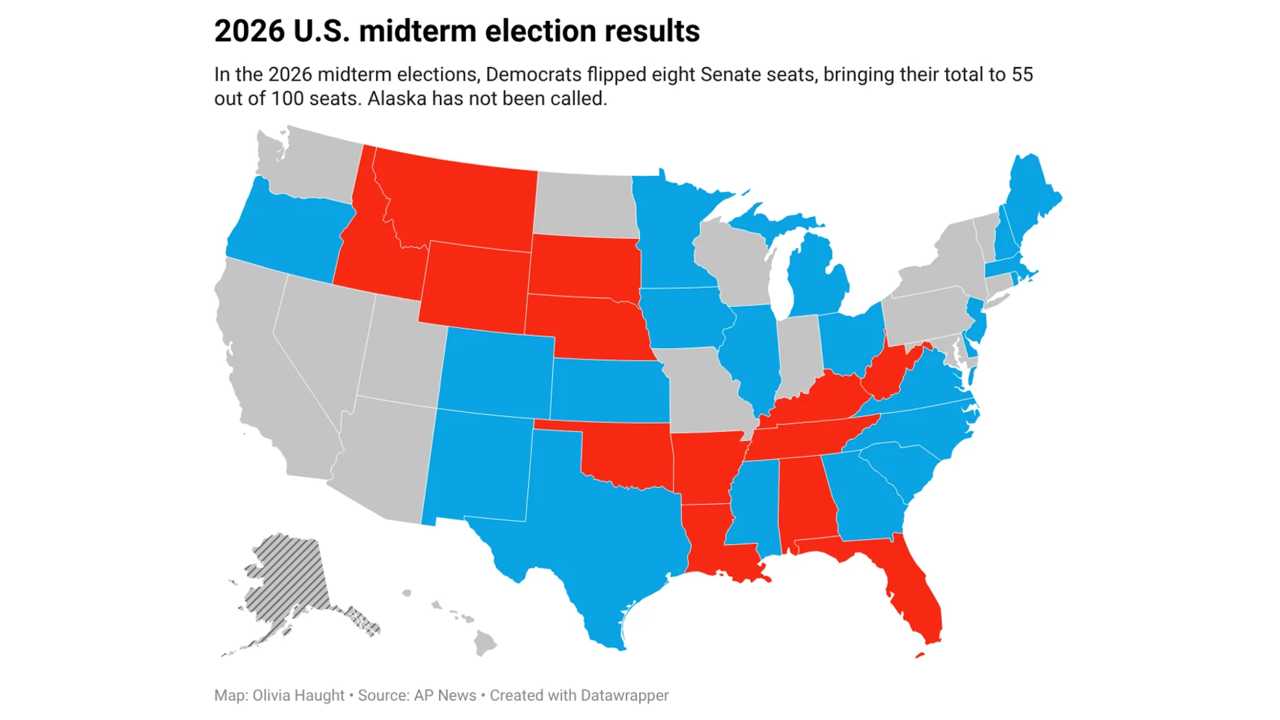
But let us not be mistaken that this was resounding support for the Democratic Party. Most voters hold unfavorable views of both parties. As Kiros put it on election night, the issue she heard most was corruption: people no longer trust any party to fight for working families. Unfortunately, some Democratic Party leaders will try to absorb this progressive energy without changing course—as already seen by their bid to advance AIPAC-hungry Hakeem Jeffries to majority leader. Many establishment Democrats, including some who flipped seats this year, still openly reject democratic socialism. They will ask the new members to be patient, to compromise, to wait. They will continue to support the genocide in Palestine. But as Melat Kiros put it, the country will not wait for these centrist cheerleaders of US imperialism. The task ahead is to turn a historic election into historic change, and to build on this momentum to win in 2028.