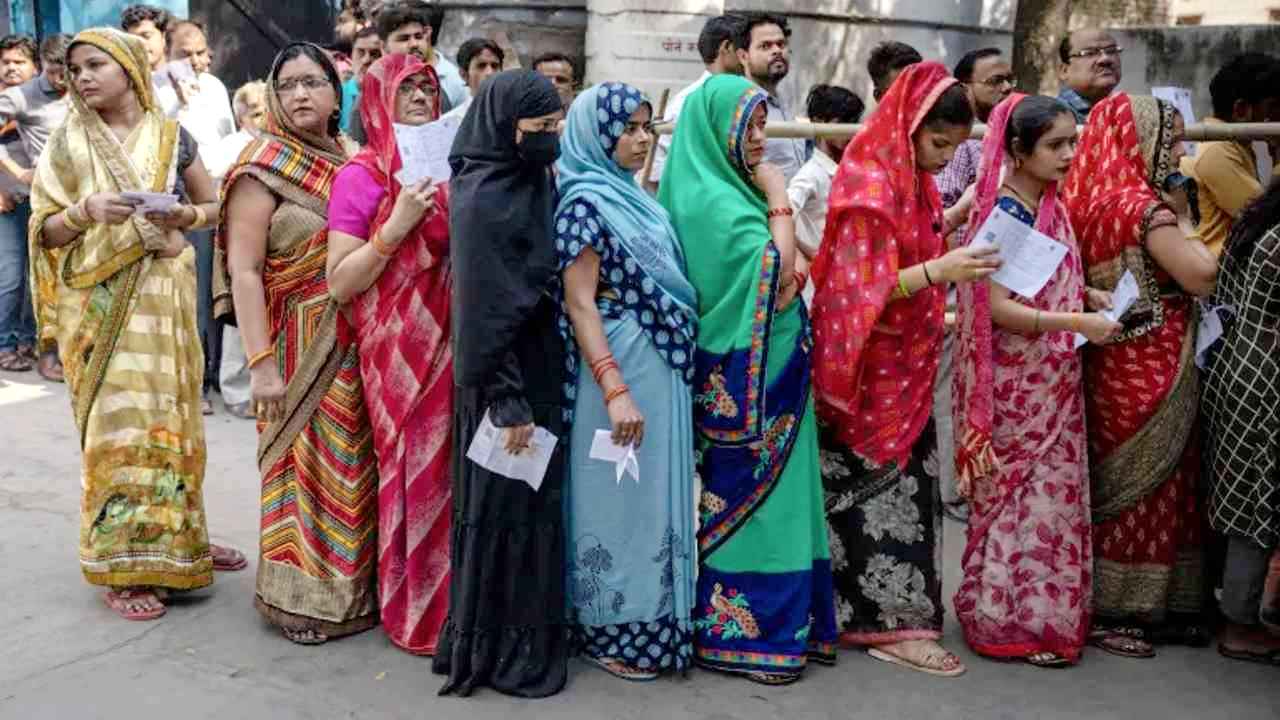
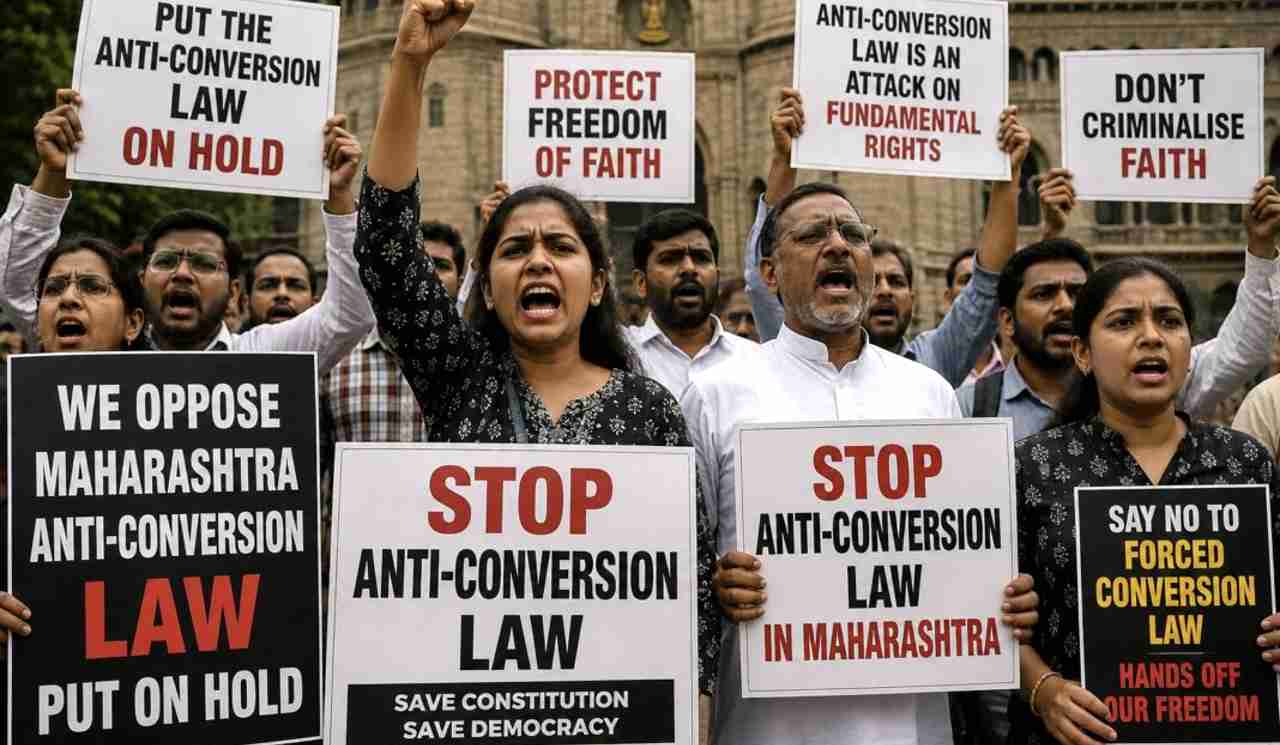
A narrative built around the anti-conversion legislations by the BJP regime and its supporters give an impression that it is meant to restrict only the Christians and the Muslims from converting followers of other religions. That the Hindus have nothing to worry about as they can freely follow their religion, and even convert Muslims and Christians to Hinduism and call it ‘ghar wapsi’. These laws in effect severely impair the rights of the Dalits, Adivasis and other marginalized sections of the society from freely choosing their religion. They are forced to remain within Hinduism and suffer caste-based oppression. Forcing masses of people to accept their humiliating conditions without protest, when they seem to have made a conscious decision to opt out of the Hindu fold as a form of symbolic protest is morally and legally wrong.
The Dalits have often used conversion from Hindu religion to escape severe inhuman conditions of untouchability and caste-based oppression, with a hope to live a dignified life. Dr. Babasaheb Ambedkar had declared in the year 1936 in his essay on “Annihilation of Caste” that the hierarchical caste system and the practice of “untouchability” was rooted in the Hindu religion. Therefore, inter-dining among various castes was necessary but insufficient to end the caste system. Dr. Babasaheb advocated that in order to annihilate untouchability, it was necessary to convert from Hinduism to a more egalitarian religion. He declared in his aforementioned essay that his birth as a Hindu was not in his hands. However, he would not die as a Hindu. Surely, on 14th October 1956, Dr. Babasaheb converted about 600,000 Dalits from Hinduism to Buddhism and administered 21 oaths to them. On 19th February, 1981, more than about 1,100 Dalits belonging to 300 Pallar community families in Meenakshipuram, Dist. Tirunelveli, TN, converted to Islam. They wanted to be accorded due dignity and be treated as equal human beings. The Pallars were resisting oppression by the landed upper-caste Thevars. Arguments of use of force and the indelible ‘foreign hand’ in the conversion of low caste and poor people have been the impetus behind the anti-conversion enactments. In the case of the much agony over the Meenakshipuram conversion, the Home Ministry presented evidence of the extent of foreign support to these conversions. However, there were several reports including one by the Regional Director of the SC/ST Federation that this conversion was a protest against the humiliation of untouchability suffered by the community. The anti-conversion laws, including the one passed by the Maharashtra Assembly considers conversions of Dalits, Adivasis and women as a more heinous crime attracting higher punishment.
Let us read the provisions of the Maharashtra Freedom of Religion Act, 2026 (hereinafter, “Maharashtra law”) which turn it into a weapon against Muslims and Christians on one hand, and prevent the oppressed castes to freely choose the religion they want to follow. The Maharashtra law largely copies the provisions of similar anti-conversion legislations in all other states as amended after 2014. Some salient features of the law are as follows:
- The law's definitions are so broad, inclusive and vague that practically no religious conversion can escape being treated as an offence. Providing free education in an institution run by a religious body, offering a better lifestyle, or even praying for divine healing can be construed as allurement, while glorifying one religion or critiquing another's rituals could attract the law's stringent penal provisions.
- The punishment prescribed is disproportionately severe, i.e., mandatory imprisonment of 7 years along with a fine of one lakh rupees, with no judicial discretion to award a lighter sentence. Where the person converted is a minor, of unsound mind, a woman, belongs to SC/ST, or where more than two persons are converted together, the mandatory fine rises to five lakh rupees, and repeat offences attract ten years imprisonment and a seven lakh rupee fine. Liability extends beyond the person converting to anyone who aided, abetted, or had even a remote link to the act, including institutions, which risk losing registration and government aid, and those who merely prepared related documents. This punishment exceeds that for many heinous crimes, such as culpable homicide not amounting to murder (5 to 10 years) or rioting (5 years), reflecting how the law treats conversion not as an exercise of religious choice but as a severe crime, what Hindu nationalists term rashtrantar, a revolt against Hindu nationalism.
- The law inverts settled criminal jurisprudence by placing the burden of proof on the accused rather than the prosecution, unlike in serious offences such as murder and rape, where the accused is presumed innocent until proven guilty. A complaint can be filed on the flimsiest suspicion or no grounds at all, and if lodged by a blood relative, an undefined term, or a relative by marriage or adoption, the police are mandatorily bound to register it, with no discretion and no provision for preliminary enquiry; officers may also take suo motu cognizance. Since the offences are non-bailable and the burden of proof lies with the accused, these provisions make it easy to harass innocent persons with wild allegations, subjecting them to prolonged imprisonment before discharge or bail, a mechanism comparable to the blasphemy laws in Pakistan, routinely used to settle scores against religious minorities such as Christians and Hindus.
Census figures prove that religious conversions have not threatened demography in the country in the last 78 years after independence. Yet, Mangal Prabhat Lodha – Minister in the state of Maharashtra – made baseless allegations without any data that there were over 100,000 cases of the so-called love jihad in Maharashtra. When a committee was formed to look into interreligious marriages, only 152 cases of interreligious marriages could be listed, and in which none of them had any complaint. More than 100 Sakal Hindu Samaj rallies were organised in most districts of Maharashtra levelling baseless allegations of love jihad and religious conversions by force, fraud or inducement. Such wild and baseless allegations were put to service to mobilise people and communally polarise the state for political outcomes. These rallies spouted extremely abusive and hateful language targeting minorities. No effective action was taken against hate mongers in spite of Bombay High Court’s orders. The BJP MLA from Jath constituency – Gopichand Padalkar, even announced a series of financial rewards for those who would attack Christians who enter their villages to attend Christian prayers. The Maharashtra law was enacted to satiate such elements and to render Muslims and Christians as second class citizens. The Maharashtra law, as indeed all anti-conversion laws, are un-Constitutional, however, the Supreme Court does not have time to hear the petitions challenging them.