WHERE PHASE III STANDS TODAY
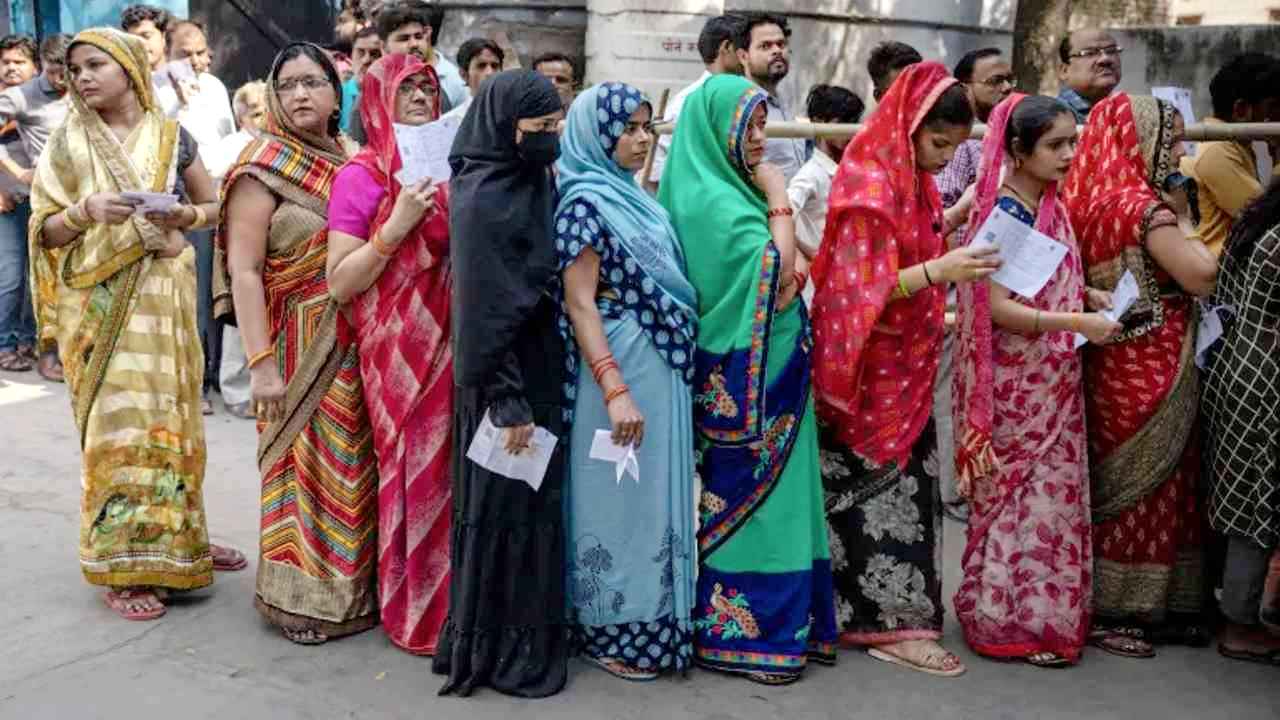
Phase III was rolled out from 14 May 2026 in a staggered manner across Delhi, Odisha, Mizoram, Sikkim, Manipur, Uttarakhand, Andhra Pradesh, Arunachal Pradesh, Haryana, Chandigarh, Telangana, Punjab, Karnataka, Meghalaya, Maharashtra, Jharkhand, Nagaland, Tripura, and Dadra and Nagar Haveli and Daman and Diu. By mid-September 2026, these 19 states and Union Territories sat at markedly different stages of the exercise.
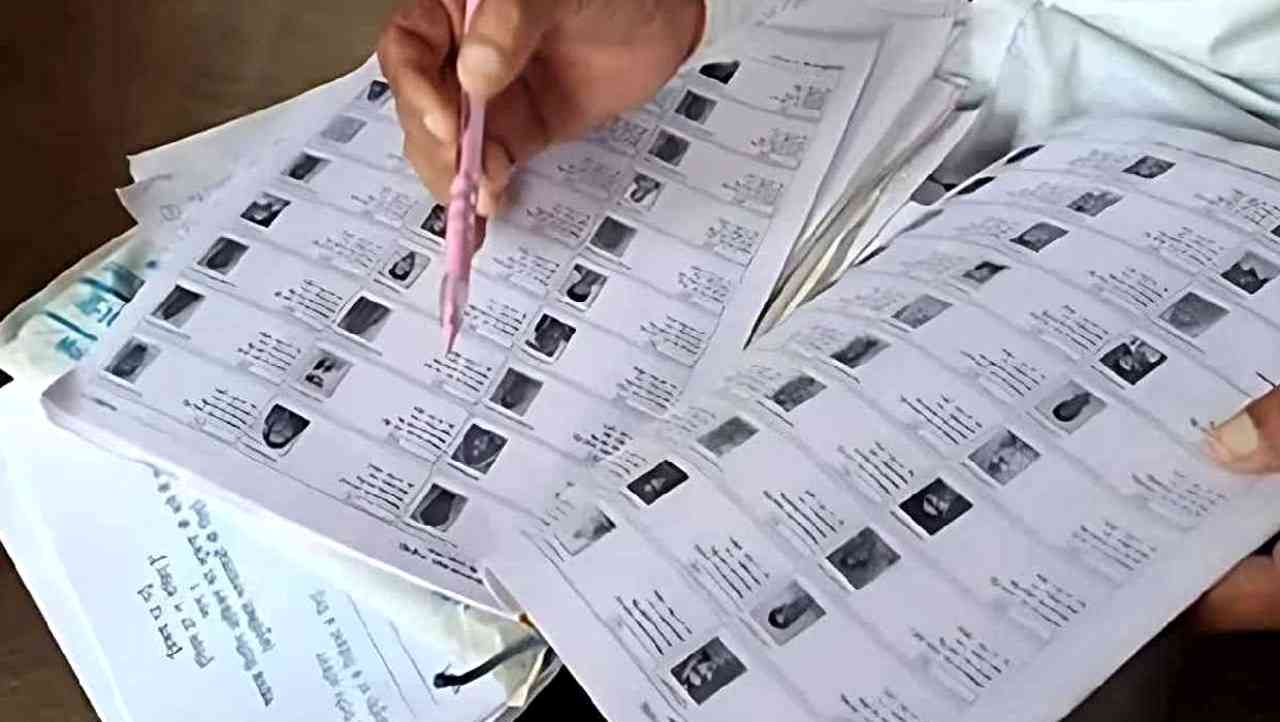
Of a total 36,64,88,908 voters across these 16 states and 3 Union Territories, a striking 16.80%, i.e., 6,15,70,102 voters, were placed on the ASDDO list. That is one in every six voters marked for deletion. A further 5,26,96,413 voters received notices in the second stage of claims and objections, across 14 states[1]. In other words, another 14.37% of voters have had to prove, all over again, that they are citizens of this country with an existing right to vote!
The chaos among voters trying to map themselves to a previous revision, the relentless pressure on BLOs, the lack of clarity in the SIR process, the opacity of senior EC officials and their refusal of accountability meant CEOs were forced to extend SIR timelines, especially in large states such as Andhra Pradesh, Maharashtra, Delhi, Karnataka and Jharkhand. That nearly every major Phase III state needed its deadline extended within days of the original schedule is itself an admission that the ECI’s own timeline could not withstand contact with reality on the ground.

ISSUES FACED BY VOTERS
a. No one told the voters that submission of the enumeration form was only step one.
Across Karnataka and Telangana, it was widely reported that voters believed submitting their enumeration form marked the end of their obligation under SIR. Many did not know their name could still be flagged under the ASDDO (Absent, Shifted, Dead, Duplicate, Other), ‘no mapping’ or ‘anomalies’/‘logical discrepancy’ categories; each carrying its own procedure of filing forms, receiving notices, attending hearings, producing documents.
The ECI’s public messaging around SIR has focused almost entirely on form-distribution and collection targets, rarely explaining the obstacle race including ASDDO marking, mapping verification, hearing-based adjudication, etc., that a voter must survive even after submitting their form.
b. The Absent/Shifted category and the “mahazar”[2] loophole.
The single largest category of exclusion in every Phase III state is ‘permanently shifted’, followed by ‘absent/untraceable’, a determination made not by the voter but, by a BLO on the strength of a ‘spot mahazar’, which is a field memo signed by the BLO and, supposedly, five other witnesses – usually neighbours – attesting that the voter no longer lives at the registered address. In Bengaluru alone, more than 49% of voters in some areas were placed under ASDDO this way, with 12.88 lakh of Bangalore Urban’s 17.7 lakh exclusions attributed to ‘permanently shifted’ status. At one polling booth in Bangalore Rural’s Anekal constituency, only a single voter was left standing after the ASDDO list was drawn up!
Karnataka’s CEO has repeatedly cited the mahazar as adequate evidence for these mass deletions. But, the mahazar is drawn up without the voter’s knowledge, in their absence, and the voter typically discovers the deletion only weeks later, when the ASDDO list is published. This procedure has so far been reported only in Karnataka; no other state appears to have adopted it.
Tellingly, the number of voters marked ‘permanently shifted’ bears little relation to the number who subsequently filed Form 6 or Form 8 after the ASDDO/draft list was published; a gap that points to deliberate voter deletion rather than genuine migration.
Interestingly, the percentage of deletions through ASDDO has only increased since Phase I and II through to Phase III, (as can be seen in Table 2 & 3 below) a telling symptom of the larger agenda:
c. “No mapping” and “logical discrepancies” run higher in Phase III than in earlier phases.
SIR’s central and most contested requirement is ‘mapping’. This establishes a link between a 2026 elector and the 2002/2003 electoral roll, either through ‘self-mapping’ or ‘progeny mapping’ via a parent’s or grandparent’s entry. Former Election Commissioner Ashok Lavasa in an article pointed to the basic unfairness of this – “non-existence in the electoral roll of the reference year cannot disqualify an elector who has been subsequently enrolled following due process.” Yet the numbers show mapping failures piling up at scale through Phase III (see Table 1).
In Karnataka, chaos during enumeration stage ran so deep that the CEO issued a media byte asking voters to submit their forms without mapping details – a decision so irresponsible that those very voters are now standing in hearing queues after receiving ‘no mapping’ notices. The list of ‘anomalies’, more commonly called ‘logical discrepancies’, has meanwhile grown to cover ever more categories, with no official clarity and no published guideline governing them (see Table 4).
d. Chaos at the hearings.
With deadlines compressed and then extended in the same breath, hearing centres have buckled under the load. BLOs issue notices fixing a date and time for the voter to appear before the ERO/AERO – often at short notice. Voters have been running from pillar to post trying to understand the process, assemble documents, and negotiate with authorities to clear their names.
In Karnataka, VIP voters were granted the convenience of house visits by BLOs and AEROs, with the CEO even posting on social media that such voters, given their stature, would not be issued notices at all. Meanwhile, the elderly, the disabled, the chronically ill, pregnant women and those living overseas were left to navigate the chaos on their own terms. The CEO eventually issued a directive exempting such voters from personal appearance but, only after the preferential treatment had already been laid bare.
Karnataka generated 43.81 lakh notices state-wide but, had delivered only 18.84 lakh, i.e., not even half, as of September 11. Are voters being given a genuine chance to respond before the window closes on 22.10.2026? Is the system even equipped to adjudicate these notices without leaving voters behind? In West Bengal, of more than 38 lakh appeals filed, only 82,782 have been disposed of, restoring 75,443 names – and more than 20 lakh of those 38 lakh appeals were filed by the Election Commission itself, challenging the inclusion of voters who had already been cleared by judicial officers during adjudication.
e. An obstacle race with a finish line nobody can find.
SIR is an obstacle race for voters, who must clear one hoop after another simply to hold onto a right they already had. West Bengal's own appeal data lays bare how uneven that race is. Of the 38.2 lakh appeals filed before appellate tribunals, 22.2 lakh came from voters whose names had already been deleted, thus accounting for roughly 82% of the 27 lakh voters struck off the rolls and placed under adjudication. At least another 16.1 lakh appeals were filed contesting the “inclusion” of other voters, though the Election Commission has, tellingly, never disclosed who filed them. Of the full 38.2 lakh appeals, a mere 1.2 lakh, i.e., just 3.1% had been decided by the time this data was submitted, leaving the overwhelming majority of contested names to hang in the balance.
The confusion runs deeper still. On 6 August, The Telegraph newspaper quoted an unidentified poll official that only 7 lakh of the 38.2 lakh appeals before the tribunals were actually seeking restoration against deletion, with 31 lakh instead challenging other voters' inclusion – a claim sharply at odds with the Commission's own figures from weeks before. When the Election Commission cannot even offer a consistent account of who is appealing what, or why, adjudication stops looking like due process and starts looking like exactly what voters have experienced it as: an obstacle race, with the finish line kept deliberately out of view.
f. Famous deletions expose what ordinary deletions conceal.
When Aadhaar architect Nandan Nilekani, his wife Rohini and their children turned up on Karnataka’s ‘no mapping’ discrepancy list, alongside Zerodha’s Kamath brothers, Kannada cine actor Shivarajkumar and Bharat Ratna scientist C.N.R. Rao, it made national news precisely because of who they were. What made headlines even more instructive was what happened next: an Election Commission official confirmed a standing provision allowing “VIPs to complete the process without attending the hearing,” with a BLO simply visiting their home.
Officials personally visited C.N.R. Rao’s residence to “felicitate” him and resolve his discrepancy on the spot; his name was added to the final roll “noting his stature and contribution.” Padma Shri awardee Harekala Hajabba received the same courtesy. No such provision exists in practice for the thousands of Dalit, Muslim and poor migrant voters in the very same city whose names sit in the same discrepancy lists. Voters must hope that a notice reaches them, then queue at hearing centres, produce documents, and again hope their names appear on the final rolls. This asymmetry is stark: it is Dalit colonies, Muslim-majority wards and migrant-worker settlements that carry the highest ASDDO and no-mapping burdens, while the state’s most powerful and well-connected residents are quietly restored on the strength of their fame alone.
g. Displacement, eviction and migrant labour are being punished as electoral fraud.
Voters marked ‘permanently shifted’ or ‘absent/untraceable’ have been categorised with striking arbitrariness. The EC has made no real effort to distinguish a voter who has genuinely relocated for good from a construction worker, domestic help or daily-wage migrant simply away for work – and this is precisely why urban areas have seen such disproportionate deletions. Gurugram’s draft roll lost 29.3% of its electorate; Hyderabad’s fell by 41%, from 47.36 lakh to 27.95 lakh; Bengaluru Urban constituency alone lost 17.17 lakh names. These are not just numbers; they map directly onto India’s largest corridors of rural-to-urban and inter-state labour migration, where workers rent rooms, shift jobs and move between cities precisely because the economy demands this mobility of them, and where SIR’s presumption of ‘permanent’ residence punishes exactly this.
At a press conference recently, when the Voter Adhikar Manch raised the issue of slum residents being unjustly displaced through bulldozer action, Delhi’s CEO responded that such voters were free to submit Form 8 to be included in the rolls. Having already lost their right to housing, they now stand to lose their right to vote at the hands of the very same state.
h. Transgender and gender-nonconforming voters face a design that was never built for them.
Karnataka’s draft electoral roll carries just 2,874 transgender electors out of more than 4.46 crore voters , a figure that has barely moved in years, despite far larger community estimates, because so many transgender people are disowned by their families, hold no continuous residence record, and cannot produce the very ‘family mapping’ documents SIR demands. A survey of 74 transgender and intersex individuals across Karnataka, conducted by My Vote, My Right, found that a majority of respondents could not identify the polling booth where they had voted in 2002. The survey also found that most respondents did not possess any of the 11 documents a voter must produce upon failing to map themselves; and even where they did, the documents did not uniformly reflect their name and identified gender.
In Mumbai, a transgender voter’s case reported by Citizen Matters shows how the stakes compound: unable to complete ‘progeny mapping’ because her parents never voted in 2002, she risks losing not just her franchise but, the voter ID that anchors her passport’s gender marker. The Election Commission’s SIR framework, built around a single reference roll and family-lineage verification, structurally erases people whose life histories do not fit conventional family structures. The same holds, perhaps, for those in inter-caste or interfaith marriages who have been disowned by their families.
‘13% Unaccounted Deletions’ Reveals SIR Social Audit
A house-to-house social audit of SIR across eight booths of Mangolpuri constituency was conducted between August and September 2026, by Jan Sarokar, MKSS, NFIW and Voter Adhikar Manch in Delhi. It was followed by a Public Hearing on September 5th, 2026, where a citizens’ jury was chaired by Justice (Retd.) Madan B. Lokur.
The social audit found that only 58% of voters were retained in the draft SIR rolls, while 13% of voters were dropped entirely, with their names not even included in the ASDD removal list, which accounted for 28% of voters.
The ECI’s own Manual on Electoral Rolls (2023) provides for a social-audit and states that draft rolls are to be verified publicly before finalisation of voter rolls. The same manual states that officials must make three visits to the voter’s address before deleting records as ASDD. However, these procedures were not followed. Therefore, the public hearing adopted some demands, including the restoration of wrongly deleted voters, for every claim and objection to go through a collective public-verification process and for utilisation of Form-8 to restore voting rights, instead of Form-6, which is meant for fresh registrations.
FORM 7: THE WEAPON HIDING IN PLAIN SIGHT
Form 7, the statutory form for deleting a voter’s own name or another elector’s, has become SIR’s most explosive and most misused instrument.
In Uttarakhand, BJP Booth Level Agents were found filing Form 7s in bulk, targeting Muslim voters across the state. A Newslaundry investigation found that in Jhabrera, Haridwar, 35 people listed as applicants across 1,657 Form-7 objections, most of them against Muslim voters. These applicants later filed affidavits before the district administration stating that their names, EPIC numbers and signatures had been misused to file these forms. Thirty-one of the 35 applicants turned out to be BLA-2s for the BJP. A separate Newslaundry report found that five men across five assembly constituencies in Uttarakhand had together filed close to 6,500 objections – again, all targeting Muslim voters! The Manual on Electoral Rolls issued by the EC once capped a BLA at 10 Form-7 filings a day; in January 2026, the ECI revised this rule to remove the limit entirely, subject only to a mandatory review once an individual applicant crosses five forms. In Kichha, 99% of all deletion requests originated from a single BJP booth-level agent – Rajesh Tiwari – again, all against Muslim voters.
Maharashtra saw two distinct controversies converge. First, the INC pointed out a disproportionately high share of ‘no mapping’ voters in its traditional constituencies, and alleged that the BJP had colour-coded the electorate by political preference before the revision began with Form-7 applications then filed against voters identified as Congress supporters, or such voters’ names pushed into the ‘anomaly’ category as a first step towards removal. Second, and more concretely, five BLOs were suspended after 3,400 enumeration forms – containing voters’ photographs, personal details and official BLO signatures were found at a private photocopy shop in Navi Mumbai, in the custody of a BJP Yuva Morcha office-bearer. The incident triggered a physical clash between Shiv Sena (UBT) and BJP workers, an FIR under the Representation of the People Act and the Bharatiya Nyaya Sanhita, and an admission from the district collector that the forms were “indeed original” and had been the BLOs’ own responsibility.
These are not isolated local scandals. The same pattern has been witnessed in West Bengal and Bihar, where bulk, pre-printed Form-7 applications were filed en masse especially against Muslim voters.
PROCEDURE AS CAMOUFLAGE
What makes this exercise so difficult to contest is precisely its bureaucratic form. Every deletion is backed by a ‘mahazar’, a ‘notice’, a ‘hearing’ – a procedure invoked wherever injustice is pointed out, or by pointing to procedures under the Registration of Electors Rules, 1960. Officials insist, correctly, that “submitting an objection does not result in automatic deletion” and that due process of verification, notice, hearing, appeal to the District Magistrate exists on paper. But, due process that a voter never learns about is no due process at all. Karnataka’s own hearing-completion data shows notices reaching barely half their intended recipients before the deadline closes. The burden-of-proof structure itself is inverted: a name excluded at the draft stage is presumed absent unless the citizen, and not the state, proves otherwise, within a compressed one-month window, often without having been informed the process was even underway.
Nor is the underlying data genuinely open to public scrutiny. Several state CEO websites that host the raw ASDDO, no-mapping and anomaly lists actively block automated access and publish figures only in scattered press notes rather than consolidated, comparable formats, making independent, state-by-state civil-society audit deliberately difficult. It is precisely this opacity that civil-society groups such as My Vote, My Right, Voter Adhikar Manch, MKSS, ADR and others have been resisting by demanding a ‘social audit’ of the lists. They have insisted that it is not merely that errors exist, but that only an independent, public audit, conducted booth by booth, with political parties, civil society and citizens present, can reveal the true scale and pattern of wrongful exclusion that the EC’s own procedure is attempting to suppress.
Moreover, the EC officers did not follow mandated procedures like ensuring a sticker outside the house of each voter – whether enumeration form was distributed or the mandatory three visits upon not finding the voter at the address. The ‘mahazar’ was also not uniformly implemented across booths, constituencies, districts or states. Such procedural lapses point to invoking procedures at the convenience of the EC officers, rather than uniformity that would ensure inclusion of voters.
Left Parties Submit Memo Reg. Delhi SIR
The left parties have submitted a memorandum to CEO Delhi, in regard to the deletion of 48 lakh voters in SIR, which forms one third of Delhi's electorate. The memorandum stated that this overwhelmingly constitutes the poor and working population. It stated that BLOs skipped prescribed procedure, where forms were neither fully distributed nor collected, illiterate voters got no assistance and many had to pay Rs. 250 to 500 at cyber cafes to fill forms. Complaints to AEROs were futile. Deleted voters, despite holding valid documents, are fearing losing ration, pension and scholarship benefits, echoing the earlier withdrawal of free bus travel for women. Separately, 11 lakh names were deleted before SIR began, mostly via BJP-linked BLA applications, without notice. Left parties demanded assistance camps, proper notice, public deletion lists, an extended deadline and support for elderly, women and disabled voters.
BACKDOOR NRC
SIR is being conducted under the spectre of “illegal immigrants” looming large over the country’s democracy. This revision of electoral rolls is not just a denial of right to vote, but will render a person stateless, as has been seen in the numerous cases of denial of passports to voters who have been deleted in the final rolls in Phase II, as also the threats of revoking ration cards. Recently, in Karnataka’s Davanagere district, EC officers flagged 10 voters who allegedly are Nepali citizens and that an enquiry was underway – the nature, procedure and competent authority conducting the enquiry are unknown. While the Supreme Court in its judgment dated 27.05.2026, stated that suspected foreign nationals should be referred to the competent authority under the Citizenship Act, 1955, the ECI, so far, has withheld any data on foreign nationals, if identified.
The entire SIR exercise has mutated from its stated objective of purification of voter rolls into a system casting suspicion on citizenship and initiation of proceedings which have immediate and grave social, economic, political, familial and fraternal consequences, including statelessness.
CONCLUSION
The Special Intensive Revision, as it has unfolded through Phase III, is not the neutral administrative “cleaning” exercise the Election Commission presents it as. It is a process whose default settings – a 2002 reference roll, family-lineage mapping, BLO-signed mahazars made in a voter’s absence, an inverted burden of proof, and a Form-7 objection mechanism with weak safeguards against bulk misuse – systematically disadvantage exactly those constituencies with the least institutional power: migrant workers whose mobility is misread as absence; Dalit and Muslim localities disproportionately represented on ‘no mapping’ and anomaly lists; transgender and queer citizens whose life histories cannot be mapped onto a nuclear-family template; and the rural and urban poor who cannot always be home when a BLO calls or cannot travel to a hearing centre during working hours. That the state can, when it chooses, resolve a Bharat Ratna scientist’s discrepancy with a home visit and a felicitation is proof that speed, sensitivity and due care are entirely possible within this system –they are simply not being extended to everyone.
Submergence of voters into a complicated bureaucratic exercise, along with the cacophony on purging “illegal immigrants” have largely been an obstacle to build a mass movement against SIR. However, the demands of “say no to SIR” to “include every voter”, highlighting discrepancies in due process, etc., has stirred the consciousness of the politically aware constituents. It is pertinent for all voters to come together and fight against this exercise.
For the left, progressive and for democratic people, the task ahead is clear: demand independent, transparent, booth-level social audits of every ASDDO, no-mapping and anomaly list before any final roll is notified; organise mass Form-6 re-inclusion drives in migrant, Dalit, Muslim, transgender and working-class localities; build legal and political pressure to reverse the burden of proof back onto the state; and, above all, refuse to let procedural language obscure what is, at its core, a fight over who gets to remain a citizen with a vote. Universal adult franchise was won through struggle. It will have to be defended the same way.
Jharkhand: BDO Assaults Villagers during SIR Hearing, FIR Filed After Protests
During an SIR hearing at the Kusmadih panchayat in Saria block of Giridih district on September 3rd, 2026, BDO Lalit Narayan Tiwari misbehaved with women voters, the BLOs and assaulted three youths, which was captured in CCTV cameras. Villagers protested these incidents and senior officials assured stringent action against the erring officials. However, later a case was registered against the protesting villagers themselves. Another protest under the aegis of CPIML leader and former MLA of Bagodar Comrade Vinod Singh was taken to protest the injustice, that compelled the administration to register an FIR against the BDO. A complaint has also been lodged with the CEO, Jharkhand regarding the administrative accountability especially when voters are running from pillar to post to protect their right to vote. A demand to withdraw the FIR against the protesting villagers has also been raised.
Notes:
1. Arunachal Pradesh, Mizoram, Nagaland, Tripura and Dadra Nagar Haveli & Daman Diu have not published the list of notices. Tripura and Nagaland are still in the enumeration phase; Manipur, Mizoram, Sikkim and Dadra Nagar Haveli & Daman Diu have already published final electoral rolls. Uttarakhand is past its scheduled date for publishing final rolls; as of the date of this article, it has not been published.
2. A document pertaining to on-the-spot physical verification and containing details of the voter and the address