Pravasi Shramik Adhikar Manch
Migrant workers in Surat, Gujarat, are fighting against inhuman working conditions, 84-hour workweeks, inadequate wages, denial of weekly holidays and the absence of basic social security. A fact-finding team of the Pravasi Shramik Adhikar Manch visited Surat following the workers’ protests in August and October 2026 to investigate their working and living conditions and the reasons behind the continuing exodus.The team, comprising Comrades Vinod Singh, Sandeep Saurav, Sadrul, Anandbhai and Abhishek, visited different industrial areas and interacted with migrant workers from Bihar, Jharkhand, Odisha and West Bengal. They also met local trade union organisers, representatives of the Indian National Trade Union Congress (INTUC), All India Trade Union Congress (AITUC) and Centre of Indian Trade Unions (CITU), and activists involved in the struggles of textile workers.
Gujarat's economic growth rests heavily on the labour of migrant workers. The state's projected Gross State Domestic Product (GSDP) for 2025–26 stood at approximately ₹29.82 lakh crore, with manufacturing and services contributing around 44 and 36 per cent respectively in 2023–24. The Surat Economic Region, comprising six districts of southern Gujarat, accounts for approximately 25 per cent of the state's GDP despite occupying only 10.8 per cent of its geographical area. Behind these "impressive" economic figures lies the reality of extreme exploitation. Migrant workers from Bihar, Jharkhand, Odisha, West Bengal, Uttar Pradesh and other states sustain Gujarat's textile, diamond and manufacturing industries. Yet the wealth they generate offers them little protection against poverty, unemployment, workplace injuries or arbitrary decisions by employers.
The fact-finding team found that workers in several textile units were compelled to work for 12 hours or more every day, often without adequate breaks or even a weekly holiday. Many workers complained that inadequate staffing forced them to operate multiple machines simultaneously for extended periods, increasing exhaustion and the risk of accidents.
Workers reported that when they demanded a weekly holiday, some factory owners sought to reduce their wages in exchange. Trade union representatives informed the team that three letters containing the workers' demands had already been submitted to the Labour Department and employers, but no effective intervention had followed. Statutory benefits, including provident fund contributions, medical assistance and bonuses, were routinely denied.
Workplace safety was another major concern. Workers described frequent accidents involving industrial machinery, often resulting in injuries without adequate medical assistance or compensation from employers. Many such accidents remained unreported. Mass layoffs, wage reductions and threats of dismissal further intensified insecurity. With limited employment opportunities in their home states, migrant workers remained particularly vulnerable to exploitation and intimidation.

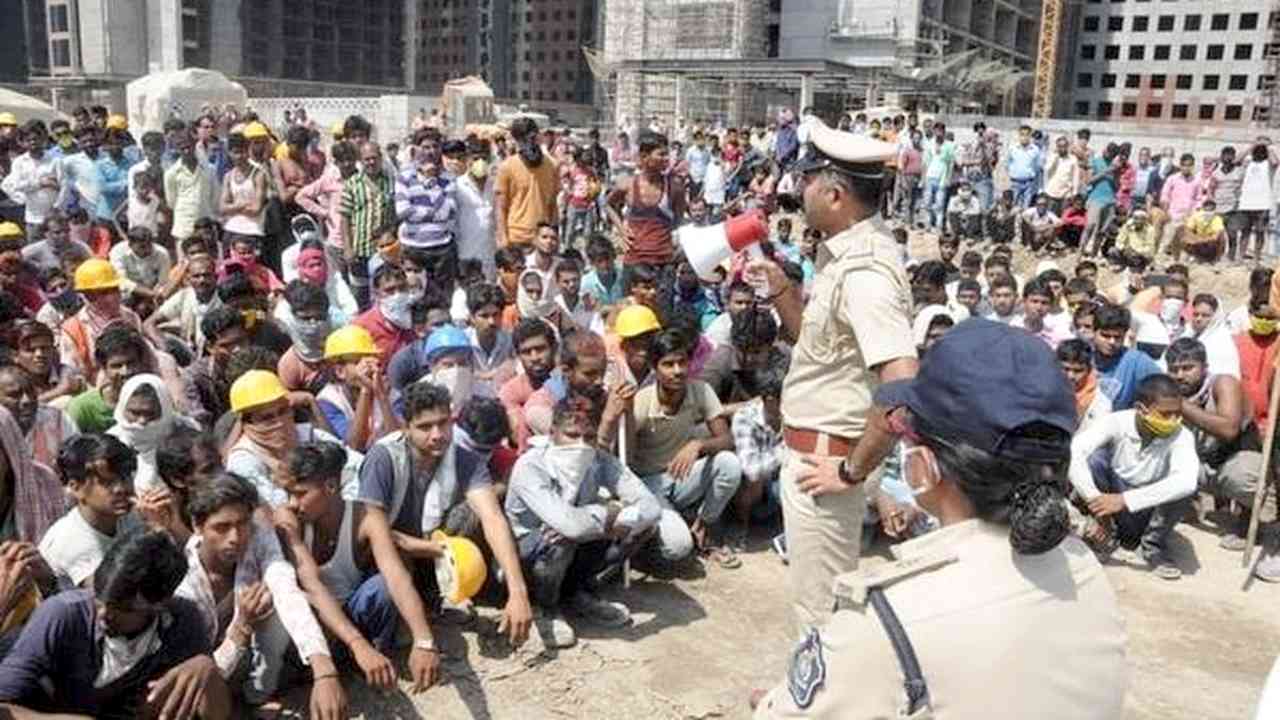
Discontent intensified in August 2026 when workers in the Vedanta Industrial Area of Amroli, Surat, organised protests demanding weekly holidays. Instead of addressing their demands, the Gujarat Police registered an FIR against 500 people and arrested eight workers.
On October 15, workers and trade union leaders attempting to raise their demands outside the Collector's office in Athwalines, Surat, faced another police crackdown. Several workers and union leaders were detained, while further FIRs and arrests followed the protests.
The movement of migrant workers back to their home states is neither new nor an isolated development. The COVID-19 crisis, industrial closures, mass layoffs, wage reductions and deteriorating working conditions have repeatedly forced workers to leave Surat. In March 2026, rising gas prices amid the US-Israeli aggression against Iran further aggravated the industrial crisis, prompting another wave of workers to return home. Workers in Surat's diamond-cutting and polishing industry have similarly endured prolonged layoffs, wage reductions, factory closures and the absence of social security.
For those returning home, the journey itself often becomes another ordeal. A migrant worker from Giridih district in Jharkhand described travelling for 42 to 45 hours in a cramped bus from Surat because of inadequate long-distance train connectivity. Yet returning home rarely brings lasting relief. The absence of adequate employment and livelihood opportunities in their native states eventually forces many workers to migrate again, often to the same industrial centres from which they had fled.
The report identifies this repeated movement between unemployment at home and exploitation in industrial cities as a defining feature of the migrant workers' predicament under the prevailing economic policies.
The conditions documented in Surat also reflect wider working-class struggles across India. During 2026, workers raised similar demands in industrial centres including Barauni, Panipat, Bhagalpur, Buxar, Jamshedpur, Haridwar, Manesar, Noida, Korba and Singrauli. Within Gujarat, protests also took place in Vapi, Dahej, Surat and Vadodara.
The fact-finding report noted that situation exposed the Modi government's anti-worker labour codes and the Gujarat government's Ease of Doing Business model, which prioritises the interests of industrialists while denying workers's their rights.
Pravasi Shramik Adhikar Manch demanded that the Union and state governments abandon anti-worker policies and ensure living wages, an eight-hour workday, guaranteed weekly holidays, workplace safety and comprehensive social security for migrant workers.
It also demanded the immediate withdrawal of all FIRs registered against protesting workers and trade union leaders, an end to police repression and employer intimidation, and protection of workers' right to organise and protest peacefully.
The organisation further called upon governments in states experiencing large-scale outward migration to formulate policies protecting the welfare and rights of workers compelled to seek employment elsewhere.
The struggle of Surat's migrant workers exposes the contradiction between the much-publicised Gujarat model of economic growth and the conditions imposed upon those whose labour sustains it. Despite arrests, threats and repeated repression, workers continue to resist exploitation and demand their fundamental rights to dignified work, fair wages, rest and social security.
( Full report will be available in forthcoming issue of Workers’ Resistance. Visit aicctu.org and liberation.org.in.)